Hotels need lighting that supports different routines without making a room feel clinical. Bedside LED Reading Lights offer focused illumination for guests who want to read, check a travel document, or settle a child without lighting the entire room. Their compact form can keep nightstands clear, while adjustable heads or arms help direct light toward a book instead of a sleeping companion. Small detail. Yet comfort depends on more than the LED source.
For hotel teams, the useful questions are practical: Is the switch easy to find in low light? Does the beam reach the pillow without glare? Can housekeeping wipe the fixture quickly, and can maintenance service it without disturbing the whole bedside setup? Warm color appearance and dimming may suit evening use, but preferences vary, so one setting will not please every guest. That is worth remembering. Product selection should also consider mounting, cable routing, durability, and compatibility with the room’s design and electrical plan. Specifications matter, but so does testing a sample in a finished room. A fixture may look elegant in a catalog and feel awkward beside a thick headboard. This guide examines why Bedside LED Reading Lights can improve hotel rooms, where they offer clear value, and what buyers should verify before specifying them. The aim is not to promise perfect sleep; lighting is only one part of a guest’s experience.
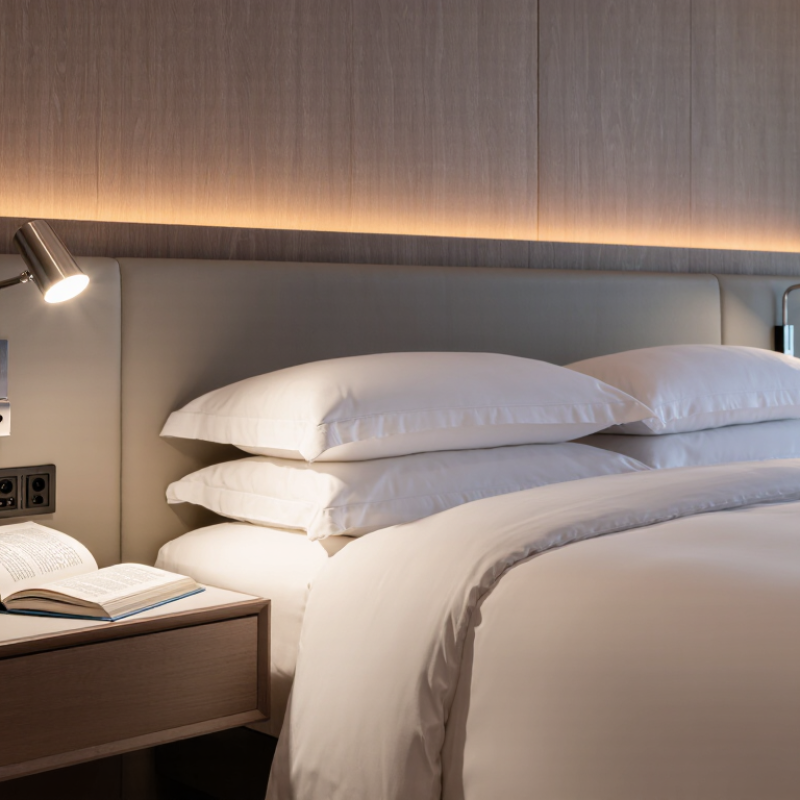
What Bedside LED Reading Lights Are and How They Work
A bedside LED reading light is a small, focused fixture placed near a hotel bed. Unlike a ceiling light, it directs illumination toward a book or tablet while keeping much of the room dim. Guests can read without flooding the whole space with light. A movable arm or swiveling head helps position the beam over a page.
Inside the fixture, a semiconductor chip produces light when electric current passes through it. A driver regulates that current, helping the LEDs operate steadily. The wall switch or touch control completes the circuit; dimmable models also adjust light output. In practice, this distinction is easy to miss. A light may look bright but still cause glare if its beam points toward a guest’s eyes.
For hotel use, placement matters as much as brightness. The beam should reach the reading area without shining directly across the bed. Warm or neutral white light can feel comfortable at night, though preferences vary. A sturdy joint, simple control, and accessible service parts also help during daily use. Still, no single setting suits every reader. Guests sit differently, and a lamp that works well beside one bed may be awkward beside another.
How They Support Guest Comfort and Reading
After a long day of travel, guests may want to read without lighting the entire room. A bedside LED reading light keeps illumination close to the book or e-reader. Its focused beam can help one guest read while another rests. Small details matter.
A flexible arm or adjustable head lets guests direct light onto a page instead of toward a pillow or window. This can reduce glare and harsh shadows, though the result depends on placement and the room’s surfaces. A simple switch within reach is useful when guests are already in bed. Clear controls matter, too; tiny symbols can be frustrating in a dim room.
Comfort is personal. Some guests prefer a softer glow, while others need brighter light for small print. Not every guest reads. A dimming option can offer flexibility without making the fixture complicated. Hotels should also consider heat, cleaning, and sturdy joints, since a loose arm may stop holding its position over time. A well-placed light does not need to be elaborate. It needs to work reliably, feel comfortable, and let guests settle into a few quiet pages.
Key Features Hotels Should Compare
When comparing bedside LED reading lights, check brightness, beam direction, and color temperature together. A guest reading in bed needs a focused pool of light, not glare across the room. Look for an adjustable head that stays in position and can be aimed without shining into a partner’s eyes. Dimming is useful, too. A low setting can support late-night reading without making the room feel fully lit. Compare the controls in person if possible; small touch buttons can be hard to find in a dark room.
Consider the details guests notice after several nights. A warm, steady light is generally comfortable for reading, while flicker or a visible hotspot can cause eye strain. Check whether the fixture’s surface stays cool during normal use, and whether its switches are easy to operate from the bed. Installation matters: confirm the mounting method, wiring requirements, and space around the headboard before specifying a model. Durability counts. A loose swivel joint may seem minor at first, but it can frustrate guests over time. No single specification fits every room. Some bedside layouts still leave the reader’s book partly in shadow, so testing a sample beside the actual bed is worthwhile.
Why Choose Bedside LED Reading Lights for Hotels?
Compare adjustable brightness and aiming to support different bedside activities. The chart shows illustrative illuminance planning ranges, measured at the relevant surface; actual needs vary by room and local lighting guidance.
When comparing fixtures, check for smooth dimming, an easy-to-reach switch, directional adjustment, suitable color quality, and low-glare light. Use these ranges as planning examples, not universal requirements.
Placement and Installation in Guest Rooms
Placement matters as much as brightness in a hotel guest room. Position each reading light so a seated guest can reach its switch without leaning across the bed. A switch near the pillow is convenient, but it should not be hidden behind cushions or bedding. Check the arrangement from both sides of the bed, including rooms with different headboard styles.
Aim the beam at the page, not directly at a guest’s eyes or across the room. A narrow, adjustable beam can help one person read while another sleeps. Before fixing the lights, tape a paper marker to the proposed location and test it from the mattress. Small changes in headboard height can alter the result. It sounds simple. It isn’t always.
For installation, keep cables concealed and provide a secure mounting surface. Have a qualified installer check the wiring, switch position, and suitability of the fitting for the room. Leave enough access for cleaning and routine servicing; a light that requires dismantling the headboard can slow room turnover. Test the controls while standing and lying down, then check for glare on glossy headboards or mirrors. A brief guest-room trial can reveal awkward reach or shadows that a floor plan misses.
Energy Use, Maintenance, and Long-Term Value
Why Choose Bedside LED Reading Lights for Hotels?
Energy Use, Maintenance, and Long-Term Value
Bedside LED reading lights can use less electricity than comparable incandescent lamps, but actual savings depend on wattage and daily use. Check the fixture’s rated power and estimate hours of operation across occupied rooms. Multiply that by the hotel’s electricity rate for a practical comparison. Small differences matter. Still, occupancy changes, dimming habits, and replacement schedules can make estimates imperfect.
Maintenance affects value, too. LEDs often need replacing less frequently, reducing staff visits to guest rooms. But the whole fixture matters: a failed driver or sealed light may require replacing more than a bulb. Dust around switches and shades also builds up, so routine cleaning and easy access are worth considering. Ask maintenance staff which parts can be changed without removing bedside furniture.
A lower purchase price may not mean a lower long-term cost. Compare fixture price, energy use, expected service life, and the labor involved in repairs. Warm, well-directed light can help guests read without lighting the entire room, though preferences vary. There is no perfect setup. Test a few rooms, gather staff feedback, and note whether controls feel intuitive after a long travel day.
Why Choose Bedside LED Reading Lights for Hotels? - Energy Use, Maintenance, and Long-Term Value
| Comparison measure |
LED reading light |
Incandescent benchmark |
Potential hotel benefit |
| Example lamp power |
4 W |
25 W |
Lower wattage for a similar low-level reading-light output; check each product’s lumen rating. |
| Annual electricity use per lamp |
14.6 kWh |
91.25 kWh |
About 76.65 kWh saved per lamp each year under the scenario below. |
| Annual electricity cost per lamp |
$2.19 |
$13.69 |
About $11.50 saved per lamp annually at the assumed electricity rate. |
| Annual electricity use for 100 lamps |
1,460 kWh |
9,125 kWh |
About 7,665 kWh less electricity per year. |
| Annual electricity cost for 100 lamps |
$219.00 |
$1,368.75 |
About $1,149.75 in annual electricity savings. |
| Illustrative rated lamp life |
25,000 hours |
1,000 hours |
Longer rated life can reduce lamp-change frequency; actual life depends on the product and operating conditions. |
| Estimated life at 10 hours of use per day |
About 6.8 years |
About 0.27 years |
Fewer routine replacements and less housekeeping or maintenance time spent changing lamps. |
| Expected annual replacements across 100 lamps |
About 15, annualized |
About 365, annualized |
An estimate based on rated life and usage; actual replacement counts will vary. |
Scenario assumptions: 100 bedside lamps, 10 operating hours per day, 365 days per year, and electricity at $0.15 per kWh. Annual energy use is calculated as lamp wattage × operating hours ÷ 1,000. Costs exclude lamp purchase, installation, labor, and disposal; actual savings depend on local electricity prices, usage, lamp output, and product life ratings.
FAQS
It is a small fixture that directs light toward a book or tablet while keeping much of the room dim.
Electric current passes through a semiconductor chip to produce light. A driver helps keep the LEDs operating steadily.
A beam aimed at a guest’s eyes can cause glare, even when the light seems bright. Aim it at the page.
Yes. A low setting lets guests read without lighting the whole room. It depends on the reader.
Warm or neutral white light may feel comfortable, but preferences vary. There is no single setting for everyone.
Confirm the mounting method, wiring needs, and space around the headboard. Check the controls from bed, too.
A steady swivel joint, accessible switches, and serviceable parts can help. A loose arm gets frustrating.
Test a sample beside the actual bed. Check for glare and shadows across the page. It may still feel awkward when guests sit differently.
Conclusion
Bedside LED Reading Lights give hotel guests focused illumination for reading or other quiet activities without lighting the entire room. They use efficient LED technology and can be controlled through simple switches or adjustable settings, depending on the fixture. A well-directed beam helps guests read comfortably while reducing glare and disturbance to anyone sharing the room.
When choosing lights, hotels can compare brightness, color tone, dimming options, ease of use, durability, and how well the design fits the room. Thoughtful placement near the bed makes controls easy to reach and positions the light where it is most useful. Secure installation and straightforward maintenance also matter, especially in rooms used by many guests. Although the initial cost may vary, efficient energy use, long-lasting components, and fewer replacements can contribute to better value over time.