Industry Intelligence & User Intent Mining
Future Procurement Trends in Commercial Hotel Wall Sconces (2025–2030)
The global hospitality lighting market is undergoing a structural transition driven by smart hotel technology integration, changing building efficiency standards, and post-occupancy maintenance economics. When procurement officers and hotel operators evaluate Hotel Wall Sconces today, they look beyond initial unit purchase costs to calculate Total Cost of Ownership (TCO) across a typical 7-to-10-year guestroom soft-goods renovation cycle.
1. IoT, BLE Mesh & Smart Room Control System (SRC) Integration
Modern hospitality properties are rapidly transitioning toward centralized Guest Room Management Systems (GRMS) such as Telkonet, INNCOM, and Interel. Future-ready hotel wall sconces must be engineered with compatible driver protocols that receive low-voltage control signals without flickering or thermal degradation. Sconces specified for guestroom headboards now frequently incorporate embedded Bluetooth Low Energy (BLE) mesh nodes and Zigbee protocols, allowing lighting scenes to adjust automatically upon guest entry, keycard activation, or time of day.
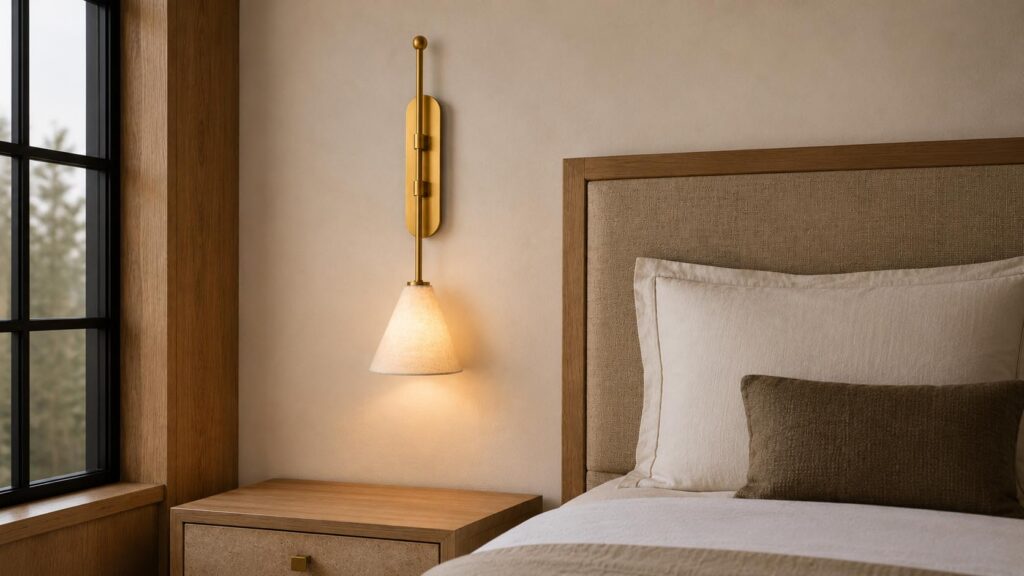
Furthermore, guestroom bedside wall sconces are increasingly tasked with providing integrated power infrastructure. Next-generation sconce backplates feature tamper-resistant AC outlets and high-output USB-C Power Delivery (PD 45W+) ports capable of charging laptops and smartphones directly from the fixture canopy, eliminating the clutter of desktop power strips.
2. Circular Economy & Sustainable Lifecycle Engineering
Sustainability mandates from major hotel conglomerates (including Marriott’s Serve 360 and Hilton’s Travel with Purpose) have fundamentally altered fixture manufacturing specifications. Sconces designed with glued, non-repairable LED assemblies are being phased out in favor of modular, field-serviceable luminaires. Key circular design standards include:
- Modular LED Light Engines: Standardized Zhaga-compliant LED boards that allow maintenance personnel to replace driver or diode modules in under 5 minutes without removing the fixture housing from the wall junction box.
- Low-VOC Architectural Finishes: Shift from traditional solvent-based wet paints to electrostatically applied powder coatings and Physical Vapor Deposition (PVD) finishes, eliminating volatile organic compounds while increasing resistance to chemical disinfectants used by housekeeping teams.
- Recycled Metallurgical Substrates: Utilization of post-consumer recycled aluminum alloys and architectural brass, backed by verified Environmental Product Declarations (EPDs) required for LEED v4.1 hospitality certification.
3. Human-Centric Circadian Rhythm & Tunable White Lighting
Travel fatigue and jetlag directly affect guest satisfaction scores. Advanced hotel wall sconces now incorporate dual-channel Tunable White LED engines (ranging dynamically from 2200K warm candlelight to 4000K crisp daylight). During morning hours, sconces cast a higher CCT spectrum to suppress melatonin and enhance alertness; as evening approaches, the fixture automatically shifts to a low-blue 2200K spectrum to promote relaxation. This visual wellness benefit serves as a key differentiator for luxury boutique brands and wellness-focused hotel properties.
Technological & Design Development Trends in Hospitality Wall Luminaires
As architectural trends favor cleaner lines, concealed light sources, and tactile material palettes, hotel wall sconce engineering has evolved rapidly. Below are the key structural and optical advancements shaping current hotel specifications:
Micro-Profile Edge-Lit Optical Light Guides
Traditional wall sconces required deep shades or bulky metal enclosures to diffuse point-source LEDs. Today, advanced edge-lit acrylic light guide plates (LGPs) allow manufacturers like Majestic Lighting to create micro-thin sconce profiles under 1.5 inches deep. Light is injected into laser-etched PMMA acrylic sheets, which reflect light uniformly across the front diffusion face while maintaining an ultraslim aesthetic ideal for space-constrained urban guestrooms.
Glare Control & Cutoff Optics for Public Corridors
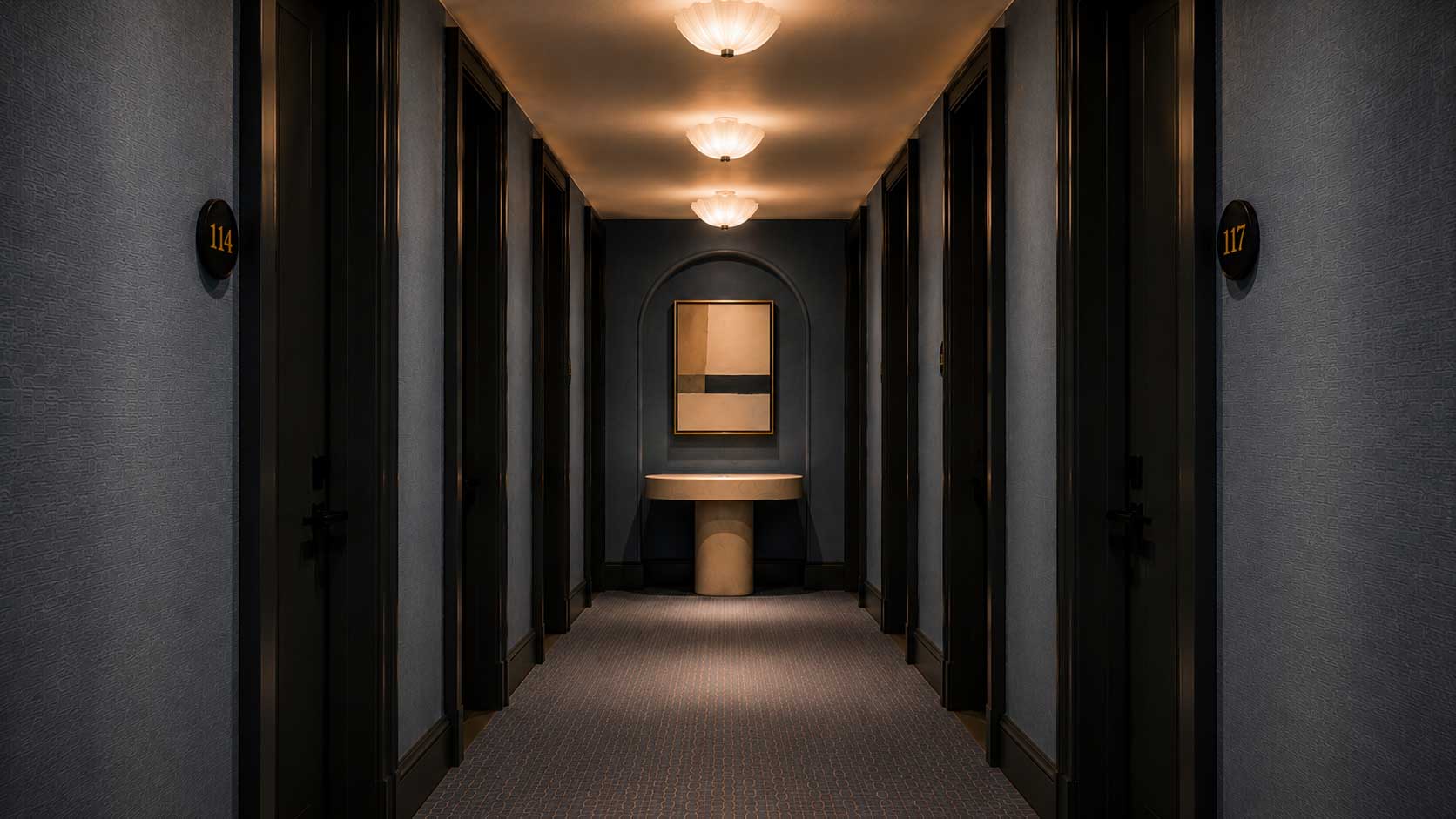
In hotel corridors extending hundreds of feet, improperly designed sconces can cause severe visual glare and high-angle reflection on polished flooring or glass panels. Modern corridor sconces utilize specialized dark-sky micro-louver baffles and indirect bounce optics. Light is thrown upward against the ceiling plane and downward onto wall surfaces, maintaining required emergency egress foot-candles without revealing raw LED diodes to guests walking down the hallway.
Need Customized CAD Drawings or Mockup Samples?
Our engineering division creates bespoke CAD renderings and physical prototypes tailored to your exact project footprint and brand matrix requirements.
Get Catalog