Choosing the right Hotel Wall Sconces can change how guests experience a room within seconds. Soft light beside a bed feels welcoming. A narrow beam over a textured wall creates depth. Poor placement, however, can produce glare on mirrors or harsh shadows across a guest’s face.
Sally Storey, an architectural lighting designer and former design director at John Cullen Lighting, has said, “The right lighting can transform a space.” Her point remains practical for international hotel buyers. A beautiful fitting is not enough. It must also support reading, relaxation, cleaning, maintenance, and consistent guest comfort. These needs vary across regions, room types, and operating budgets.
This guide reviews ten Hotel Wall Sconces for global purchasing decisions. It considers illumination quality, material durability, mounting flexibility, energy performance, and visual character. Color temperature matters. Warm 2700K light may suit bedrooms, while 3000K can provide clearer circulation lighting. High color rendering helps fabrics, artwork, and skin tones appear natural.
Small details often decide long-term value. Check the switch position. Inspect the shade’s heat resistance. Confirm replacement parts and installation instructions. Verify certifications for the intended market. These points sound ordinary, but they are frequently missed.
Some selections may appear less dramatic. That is not always a weakness. A quieter design can age better across changing hotel styles. Still, no ranking can replace an on-site lighting test. Wall color, ceiling height, and camera exposure may alter the result. Treat this list as a careful starting point, not a final promise.
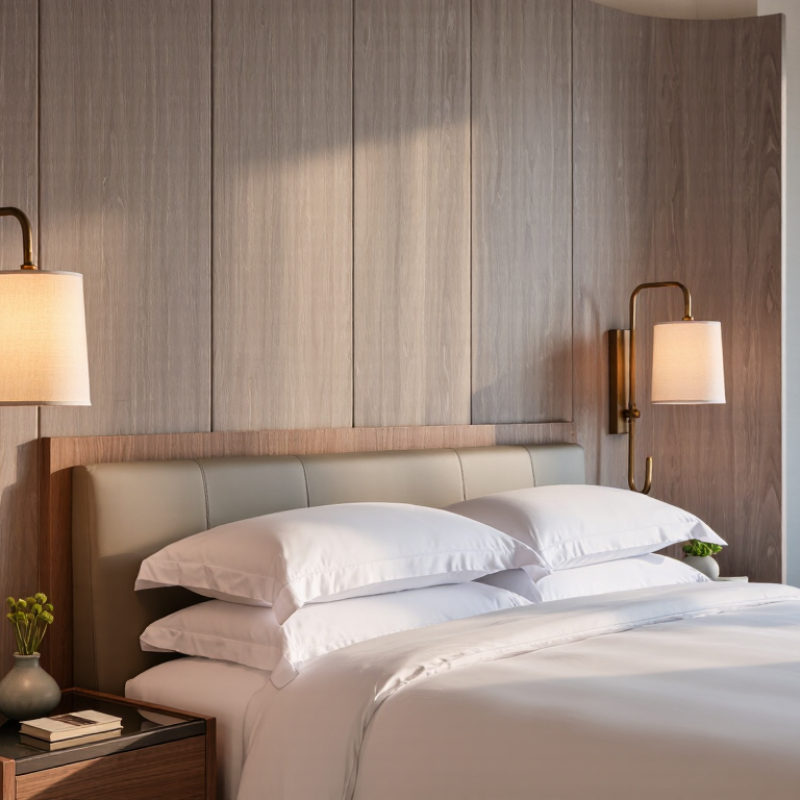
A high-quality hotel wall sconce must do more than look attractive. It should support comfort, safety, and reliable daily operation. In hotel projects, I have seen guests notice glare before they notice decorative details. A well-designed sconce uses a shaded light source and controlled diffusion. It creates a soft pool of light beside the bed or mirror. Harsh reflections can make a room feel cheaper.
Material quality matters, but construction matters more. Solid metal, stable finishes, and heat-resistant diffusers usually withstand frequent cleaning. The fixture should also provide consistent color rendering, preferably with a high CRI for accurate skin tones and artwork. Warm light around 2700K to 3000K often suits guest rooms. Bathrooms may need stronger, clearer illumination. Specifications must match local electrical requirements and include credible safety testing documents.
Installation details reveal real quality. A secure backplate prevents movement when staff clean the wall. Accessible drivers and replaceable components can reduce future maintenance costs. I would inspect wiring space, mounting hardware, and dimming compatibility before approving a sample. A polished sample can hide weak internal parts. That happened to me once. The finish looked excellent, but the driver produced an audible buzz. Small oversights become repeated complaints across hundreds of rooms. Even strong designs deserve practical testing under heat, dust, cleaning chemicals, and nightly use.
A high-quality hotel wall sconce should provide the right maintained illuminance for its application while supporting visual comfort, durability, efficient operation, and safe installation. The chart compares typical reference illuminance targets used for hotel spaces, based on lighting practice and EN 12464-1 guidance. Final specifications should be confirmed with local regulations, room layouts, mounting height, glare control, and the project lighting designer.
Choosing hotel wall sconces requires more than attractive styling. In project reviews, I have seen beautiful fittings fail because their light was harsh or difficult to service. Start with the lighting purpose: bedside reading, corridor guidance, bathroom illumination, or decorative mood. Check lumen output, color temperature, glare control, and color rendering. Warm light often suits guestrooms, while corridors may need clearer visibility. A refined appearance cannot replace reliable performance.
Construction quality matters in busy hospitality spaces. Look for durable metal, stable finishes, secure diffusers, and accessible components. Confirm the fixture’s voltage range, dimming compatibility, heat management, and installation method before ordering. Global buyers should request test reports and conformity documents for the destination market. IP ratings are important in bathrooms and humid areas. Fire safety requirements also deserve careful review. Specifications can be incomplete, so ask questions.
Tips: Compare samples under real hotel lighting, not only catalog images. Touch the finish. Inspect the cable entry and mounting plate. Ask how replacement parts are supplied. Check cleaning instructions, because strong chemicals may damage coatings. Calculate total ownership cost, including installation, energy use, maintenance, and shipping. A lower purchase price may become expensive later. I would also test one room before approving a large order. My earlier preference for complex decorative designs changed after repeated maintenance delays. Simpler fixtures are not always plain; they are often easier to trust.
10 Best Hotel Wall Sconces for Global Buyers
Ten Hotel Wall Sconces for Different Hospitality Settings
A hotel needs more than one lighting mood. These ten wall sconces suit distinct hospitality settings: a slim LED sconce for guest rooms, a reading sconce beside beds, and a dimmable pair for premium suites. A moisture-resistant fixture fits bathrooms, while a shielded, low-glare model supports corridors. For lobbies, choose a sculptural uplight; restaurants benefit from warm, downward illumination. Spa areas need soft indirect light, balconies require weather-rated construction, and conference rooms need adjustable, glare-controlled sconces. Service corridors can use durable, easy-clean fixtures.
Energy performance deserves equal attention. The U.S. Department of Energy reports that LEDs use at least 75% less energy than incandescent lighting and can last up to 25 times longer. The 2024 UNEP Global Status Report states that buildings consume about 30% of global energy. Efficient sconces can therefore reduce operating pressure, especially in hotels running continuously. Select replaceable components, compatible dimming systems, and color temperatures near 2700K to 3000K for restful rooms. Public areas may need 3000K to 3500K, depending on finishes and daylight.
Details matter. Check ingress protection ratings, cleaning access, mounting strength, and local electrical certification before purchasing. A beautiful sconce can still create harsh shadows. That mistake is common. Test one mock-up beside a bed, mirror, or corridor sign before approving hundreds. Specifications may look complete, yet guest comfort can expose weaknesses. Consult a qualified lighting professional for final photometric and safety verification.
A practical comparison of hotel wall-sconce types using commonly specified lighting, safety, installation, and comfort requirements for hospitality projects worldwide.
| No. | Recommended Sconce Type | Best Hospitality Setting | Typical Light Output | Recommended Color Temperature | Recommended Color Rendering | Ingress Protection | Common Material and Finish | Key Selection Consideration |
|---|---|---|---|---|---|---|---|---|
| 1 | Bedside Reading Sconce | Guest rooms, suites, and serviced apartments | 300–600 lm per fitting; approximately 3–8 W LED | 2700–3000 K | CRI 90 or higher for comfortable reading and accurate fabric colors | IP20 for dry indoor rooms | Powder-coated steel, aluminum, glass, or fabric shade | Choose a shielded or adjustable design to reduce glare for guests sharing the room. |
| 2 | Vertical Bedside Sconce | Contemporary guest rooms and compact urban hotels | 400–800 lm per fitting; approximately 5–10 W LED | 2700–3000 K | CRI 90 or higher | IP20 for dry indoor rooms | Aluminum or steel body with frosted acrylic diffuser | Use a narrow profile when bedside clearance is limited; include an individual switch where possible. |
| 3 | Bathroom Mirror Sconce | Guest bathrooms, vanity areas, and premium suites | 600–1,200 lm per fitting; approximately 8–15 W LED | 3000–3500 K | CRI 90 or higher for accurate skin-tone and makeup evaluation | IP44 minimum in splash-prone zones; follow local bathroom zoning rules | Aluminum, stainless steel, opal glass, or sealed acrylic | Provide even vertical illumination and avoid placing the light where it creates strong facial shadows. |
| 4 | Corridor Up-and-Down Sconce | Guest corridors, lift lobbies, and circulation areas | 500–1,000 lm per fitting; approximately 6–12 W LED | 2700–3000 K | CRI 80 minimum; CRI 90 preferred for high-end interiors | IP20 indoors; IP44 for semi-exposed locations | Die-cast aluminum or steel with powder-coated finish | Use indirect distribution to reduce eye-level glare and create consistent wall-washing between fittings. |
| 5 | Decorative Fabric-Shade Sconce | Boutique hotel corridors, lounges, and intimate seating areas | 300–700 lm per fitting; approximately 4–8 W LED | 2700 K | CRI 90 preferred for textiles, wood, and decorative finishes | IP20 for dry interiors | Metal frame with flame-retardant fabric or glass shade | Confirm shade material, lamp heat management, cleaning access, and local fire-safety requirements. |
| 6 | Picture-Light Sconce | Art corridors, galleries, heritage hotels, and feature walls | 400–900 lm per fitting; approximately 5–12 W LED | 3000–3500 K | CRI 90 or higher; select a lower-glare optic for artwork | IP20 for dry indoor areas | Aluminum or brass-effect metal with adjustable head | Specify beam angle and shielding according to artwork size, viewing distance, and conservation needs. |
| 7 | Outdoor Terrace Sconce | Hotel terraces, balconies, courtyards, and outdoor dining areas | 500–1,000 lm per fitting; approximately 6–12 W LED | 2700–3000 K | CRI 80 minimum; CRI 90 preferred for dining environments | IP65 recommended for exposed outdoor locations | Marine-grade aluminum, stainless steel, or UV-resistant polycarbonate | Check corrosion resistance, drainage, UV stability, operating temperature, and local wiring regulations. |
| 8 | Wet-Area Safety Sconce | Spa facilities, pool approaches, changing rooms, and wellness areas | 400–900 lm per fitting; approximately 5–12 W LED | 2700–3000 K | CRI 80 minimum; CRI 90 preferred in treatment and relaxation areas | IP65 for exposed wet areas; verify local electrical zones | Sealed aluminum, stainless steel, tempered glass, or impact-resistant polymer | Confirm protection against water, condensation, cleaning chemicals, and accidental impact. |
| 9 | Restaurant Accent Sconce | Hotel restaurants, bars, cafés, and private dining rooms | 300–800 lm per fitting; approximately 4–10 W LED | 2200–2700 K | CRI 90 or higher to enhance food, wood, upholstery, and table settings | IP20 indoors; IP44 for partially exposed dining areas | Brass-effect metal, painted steel, glass, ceramic, or stone-look materials | Select dimmable fittings with low glare and warm light to support a relaxed dining atmosphere. |
| 10 | Conference and Ballroom Sconce | Meeting rooms, ballrooms, pre-function spaces, and event venues | 800–1,500 lm per fitting; approximately 10–18 W LED | 3000–3500 K | CRI 80 minimum; CRI 90 preferred for premium events and photography | IP20 for dry indoor venues | Aluminum or steel with glass, acrylic, or decorative metal diffuser | Prioritize dimming compatibility, flicker control, emergency-lighting coordination, and replacement access. |
Specification note: The figures shown are typical planning ranges rather than fixed product ratings. Final selection should be verified against room size, mounting height, lighting calculations, local electrical codes, fire regulations, dimming systems, and applicable regional standards.
When comparing ten hotel wall sconces, design should support comfort, not only decoration. Slim cylindrical forms suit corridors, while fabric shades soften bedside lighting. Brushed brass, aluminum, glass, and powder-coated steel offer different maintenance needs. In busy hotels, sealed surfaces resist dust and simplify cleaning. I have found that sharp edges often look impressive in photographs but feel unsuitable beside beds.
Lighting quality requires closer inspection. Choose warm white light, usually 2700K to 3000K, for guest rooms and lounges. A high color rendering index helps fabrics, artwork, and skin tones appear more natural. Diffused lenses reduce glare across mirrors and polished stone. The U.S. Department of Energy reports that LED lighting uses at least 75% less energy and lasts up to 25 times longer than incandescent lighting. However, poor drivers can still create flicker and early failures. That detail is easy to miss.
Tips: Request photometric files before purchasing. Check lumen output, beam angle, dimming compatibility, and replacement access. The International Energy Agency states that lighting represents about 15% of global electricity consumption. Efficient sconces can therefore reduce operating pressure across large properties. Still, energy efficiency should not replace visual comfort. My own selection process sometimes favors a slightly less efficient fixture when its glare control is clearly better. That compromise deserves review, not automatic approval.
Global buyers should judge hotel wall sconces by compliance, not appearance alone. IEC 60598-1 covers general luminaire safety, while local certification rules may differ. Check voltage, frequency, earthing, fire ratings, and dimming compatibility before ordering. For bathrooms or coastal properties, an appropriate IP rating helps protect against moisture and corrosion. Small details matter.
Installation costs can exceed the fixture price. Confirm junction-box dimensions, cable access, mounting plates, and driver location with the installer.
The U.S. Department of Energy reports that LED lighting can use at least 75% less energy and last up to 25 times longer than incandescent lighting. However, poor ventilation can shorten driver life.
A cheaper fitting may need earlier replacement. That is not always cheaper.
Tips: Request photometric files, test samples, certificates, spare drivers, and clear installation drawings.
Compare total ownership cost over five years, including labor and replacement parts. The IEA has reported that lighting represents about 15% of global electricity consumption, so efficient sconces can reduce operating pressure.
Still, energy savings depend on controls, occupancy, and cleaning. Dusty shades reduce useful light.
Maintenance teams should inspect fixings, wiring, and color consistency during room servicing. A perfect specification can still fail in practice.
It should provide comfort, safety, durability, and reliable daily performance. Good design matters. A shaded source should create soft light without harsh glare.
Warm light between 2700K and 3000K usually feels comfortable beside a bed. Bathrooms may need brighter, clearer illumination for grooming and mirrors.
Guests often notice uncomfortable reflections before decorative details. Controlled diffusion creates a gentle pool of light on the wall or bedside area.
Solid metal, stable finishes, and heat-resistant diffusers handle frequent cleaning better. Surfaces should resist dust, cleaning chemicals, and repeated handling.
Confirm voltage, frequency, earthing, fire ratings, and dimming compatibility. Local safety documents must match the installation location and project requirements.
Check junction-box dimensions, cable access, mounting plates, and driver locations before ordering. Clear drawings help installers avoid expensive surprises.
A beautiful sample may hide weak components or poor ventilation. I once saw a polished fixture produce an audible buzz. That mistake stayed with me.
Compare five-year ownership costs, including labor, replacement parts, and energy use. The cheapest fitting may need earlier replacement. That is not always cheaper.
Inspect fixings, wiring, driver performance, shades, and color consistency during room servicing. Dusty shades reduce useful light. Small issues can become repeated complaints.
Choosing the right Hotel Wall Sconces requires more than selecting an attractive fixture. High-quality options should combine durable construction, reliable performance, safe operation, and a design that supports the atmosphere of the property. This guide explains key evaluation criteria, including material quality, light distribution, color temperature, glare control, energy efficiency, ease of cleaning, and compatibility with different interior styles. It also presents ten suitable concepts for guest rooms, corridors, restaurants, lounges, and other hospitality settings.
For global buyers, the comparison should also consider installation requirements, voltage compatibility, certifications, packaging, lead times, pricing, replacement parts, and long-term maintenance. Efficient LED technology, serviceable components, and adaptable mounting systems can help reduce operating costs while maintaining guest comfort. By balancing visual appeal, lighting performance, safety expectations, and total ownership costs, hospitality purchasers can select Hotel Wall Sconces that deliver dependable value across diverse projects and regional requirements.