Choosing Multifamily Lighting Solutions is not simply a fixture-selection exercise. It affects resident comfort, property identity, operating costs, safety, and long-term maintenance. A warm lobby may feel welcoming, while a poorly aimed garage light can create harsh glare and deep shadows. Small decisions become visible every evening.
Lighting researcher Mariana Figueiro, PhD, has stated, “Light is the most powerful synchronizer of the circadian system.” Her observation adds an important health perspective. In multifamily communities, lighting should support both visual needs and daily routines. Hallways require consistent illumination. Bedrooms need controllable, low-glare sources. Outdoor paths demand reliable visibility without overwhelming nearby homes.
The best solution begins with the property’s actual conditions. Consider ceiling heights, resident age groups, climate, energy targets, and cleaning schedules. Review color temperature, dimming capability, controls, emergency performance, and replacement access. A decorative pendant may look excellent in a rendering, yet become difficult to clean above a busy entrance. That matters.
Experience also warns against chasing efficiency alone. Lower wattage is useful, but uncomfortable light can lead residents to complain or disable controls. No fixture wins everywhere. A promising plan can still fail when installation teams receive unclear instructions. Careful mock-ups, nighttime walkthroughs, and measured light levels provide stronger evidence than attractive product images.
This guide explains how to compare Multifamily Lighting Solutions with practical judgment. It examines performance, aesthetics, lifecycle value, and resident experience. Some recommendations may need adjustment. Buildings are different. That is the point. A dependable lighting strategy responds to real spaces, real people, and imperfect conditions.
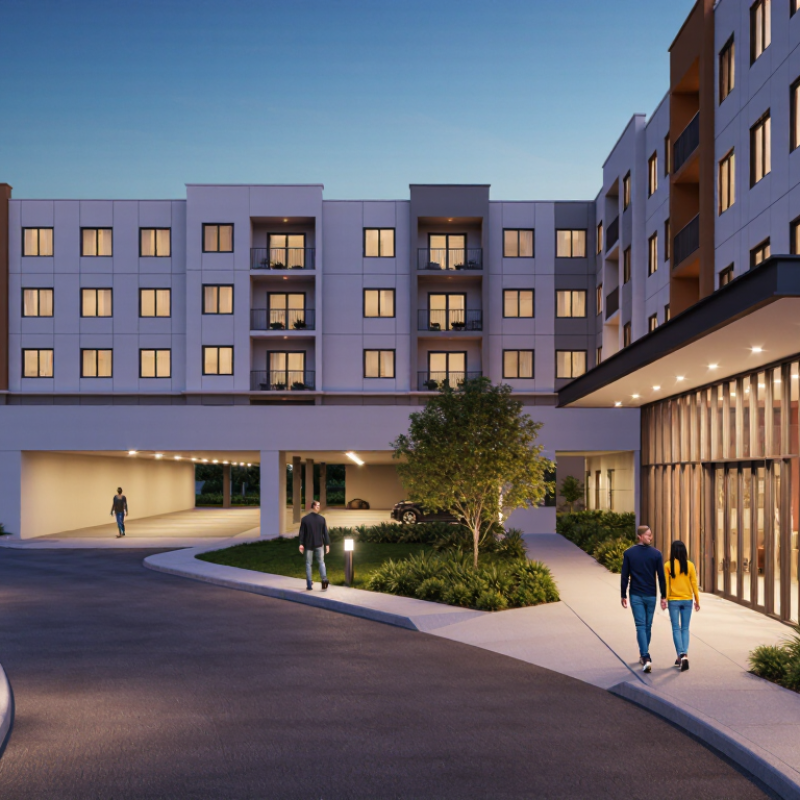
How to Choose Multifamily Lighting Solutions?
Define Multifamily Lighting Needs by Building Type and Resident Use
Choosing multifamily lighting starts with the building, not a fixture catalog. A mid-rise apartment needs different control zones than a senior living community. Corridors may require steady, glare-controlled light and clear floor transitions. Parking areas need durable fixtures, even illumination, and dependable nighttime controls. In a renovated historic building, wiring paths may limit ideal placement. I have learned that a beautiful plan can fail when maintenance access is ignored. Measure ceiling heights, circuit locations, window exposure, and emergency egress routes before specifying equipment.
Resident routines should shape each lighting decision. Families often need bright, shadow-free light near entrances, elevators, kitchens, and laundry rooms. Older residents benefit from reduced glare, strong contrast, and consistent illumination along walking paths. Students may value focused task lighting, charging access, and simple room controls. In common lounges, adjustable scenes can support reading, conversation, or quiet work. Avoid assuming every resident uses spaces the same way. Ask property staff about complaints, peak traffic, and recurring service calls. Their observations often reveal details drawings miss.
A practical specification balances comfort, safety, energy use, and replacement time. Choose color temperatures that feel consistent across connected spaces. Confirm controls are understandable without a training session. Test sample areas at night, not only during daylight. This step exposes reflections, dark corners, and uncomfortable brightness. Some recommendations may need revision. That is normal. Document maintenance intervals, access requirements, and expected performance so owners can verify results after installation.
| Building Type / Area | Typical Resident Use | Recommended Illuminance | Suggested CCT | Color Rendering | Preferred Fixture Approach | Recommended Controls | Key Selection Priorities |
|---|---|---|---|---|---|---|---|
| Apartments Living Room / Bedroom |
Relaxing, reading, watching television, sleeping, and occasional cleaning. | 100–300 lux for general ambient lighting; provide higher localized light for reading. | 2700–3000 K | CRI ≥80; CRI ≥90 is preferable where furniture, artwork, and finishes must appear more natural. | Dimmable ceiling fixtures, wall sconces, table lamps, and indirect or layered lighting. | Dimmers, scene controls, and vacancy switching where appropriate. | Low glare, quiet operation, comfortable color, and flexible dimming. |
| Apartments Kitchen / Dining Area |
Food preparation, cooking, dining, cleaning, and social activity. | 300–500 lux on work surfaces; use task lighting beneath cabinets where needed. | 3000–4000 K | CRI ≥80; CRI ≥90 is recommended for accurate food and finish appearance. | Even ceiling lighting combined with under-cabinet linear lighting and pendant fixtures over islands. | Separate switching for ambient, task, and decorative lighting; dimming for dining areas. | Minimize shadows on countertops, reduce glare from glossy surfaces, and simplify cleaning. |
| Apartments Bathroom |
Grooming, bathing, makeup application, shaving, and cleaning. | 200–500 lux, with balanced vertical illumination at mirrors. | 3000–4000 K | CRI ≥90 is preferred for skin tones, cosmetics, and color matching. | Damp-location-rated ceiling fixtures, mirror-side sconces, or illuminated mirrors. | Occupancy or vacancy sensors; separate mirror and general-light switching. | Moisture resistance, facial-shadow reduction, safe optical performance, and easy maintenance. |
| Apartment Building Corridors and Lobbies |
Walking, finding unit numbers, carrying packages, greeting visitors, and waiting for elevators. | 100–200 lux for corridors and circulation areas; lobby levels may require more depending on layout. | 3000–4000 K | CRI ≥80 | Low-glare linear, recessed, surface-mounted, or wall-mounted LED fixtures with uniform distribution. | Occupancy sensors, time scheduling, daylight dimming near windows, and low-level standby operation. | Uniformity, visual comfort, wayfinding, vandal resistance, and reduced energy use during low traffic. |
| Stairwells and Emergency Egress |
Routine stair travel, evacuation, moving household items, and building inspections. | Approximately 100–200 lux on steps and landings, subject to local code and project requirements. | 3000–4000 K | CRI ≥80 | Shielded, impact-resistant fixtures with consistent vertical and horizontal illumination. | Occupancy sensors with minimum safety levels; emergency lighting and backup power where required. | Uniform step visibility, reliable operation, impact resistance, and compliance with life-safety codes. |
| Amenity Areas Fitness Center |
Exercise, stretching, equipment use, group classes, and cleaning. | 300–500 lux, with higher levels where equipment displays or detailed tasks are present. | 3500–4000 K | CRI ≥80; CRI ≥90 can improve material and skin-tone appearance. | Glare-controlled linear or panel fixtures with optional accent lighting and high impact resistance. | Occupancy sensing, scheduling, daylight dimming, and user-adjustable scenes. | Low glare in mirrors, flicker-conscious performance, easy cleaning, and flexible scene control. |
| Amenity Areas Community Room / Lounge |
Meetings, dining, study, social events, entertainment, and resident gatherings. | 200–300 lux for general activities; provide task lighting for reading or paperwork. | 2700–3500 K | CRI ≥80; CRI ≥90 is suitable for hospitality-focused interiors. | Dimmable ambient fixtures, decorative pendants, wall lighting, and adjustable accent fixtures. | Scene presets for meetings, dining, cleaning, presentations, and events. | Adaptability, comfortable brightness, low glare on screens, and attractive visual appearance. |
| Parking Garage and Covered Parking |
Vehicle movement, pedestrian circulation, loading, package handling, and security observation. | Approximately 75–150 lux for general parking areas; verify local parking and security requirements. | 4000–5000 K | CRI ≥70; CRI ≥80 is preferable near entrances, elevators, and pedestrian zones. | Linear or sealed LED fixtures with wide distribution and high resistance to dust, moisture, and impact. | Zoned occupancy sensing, dimming, scheduling, and daylight response near perimeter openings. | Uniformity, visibility at pedestrian routes, durability, low maintenance, and energy reduction. |
| Outdoor Paths, Entries, and Courtyards |
Arriving home, walking between buildings, using outdoor amenities, and locating entrances. | Approximately 10–50 lux depending on pedestrian activity, hazards, and local safety requirements. | 2700–4000 K | CRI ≥70; CRI ≥80 is preferable at entrances and pedestrian decision points. | Shielded bollards, wall packs, pathway fixtures, canopies, and downward-directed luminaires. | Photocells, astronomical time clocks, occupancy boost, and dimming during low-use periods. | Dark-sky performance, glare control, weather resistance, safe routes, and limited light spill. |
| Service Areas Laundry and Refuse Rooms |
Sorting laundry, reading machine controls, handling supplies, cleaning, and disposing of waste. | 200–300 lux for general tasks; use higher task levels where labels require close reading. | 3500–4000 K | CRI ≥80 | Enclosed, easy-clean LED fixtures with broad, uniform distribution. | Occupancy sensors with adjustable time delay and manual override for maintenance. | Moisture and dust resistance, reliable switching, good vertical illumination, and simple maintenance. |
Planning note: Illuminance values are typical design ranges for early-stage selection. Final lighting levels, emergency provisions, glare limits, environmental ratings, and control requirements should be verified against the applicable local building, electrical, energy, accessibility, and life-safety codes.
Set goals for safety, comfort, efficiency, and visual appeal. Safety deserves priority in stairs, entrances, garages, corridors, and walkways.
Inspect spaces during daylight and nighttime. Check dark corners, floor-level shadows, elevation changes, glare, and reflective surfaces.
Use balanced, warm light in lobbies and shared rooms. Excessive blue light may feel harsh after sunset.
Residents notice flicker, glare, and uncomfortable shadows quickly. Their feedback may challenge the original design.
Use occupancy sensors, daylight controls, dimming, and efficient light sources. Controls must remain simple and properly commissioned.
Measure corridors, stairs, parking areas, ceilings, wiring, and mounting points. Record water exposure, complaints, dark corners, and glare.
Choose fixtures with service access and replaceable components. Keep records for cleaning, battery checks, failures, and sensor adjustments.
Poor sensor placement can leave hallways dark or trigger complaints. I sometimes overestimate visual appeal, so post-occupancy reviews matter.
Check current local requirements for emergency lighting, accessible routes, energy use, electrical safety, and light trespass. Document permits and inspections.
Highlight artwork, landscaping, textures, or architectural details with restraint. Test the space from a resident’s eye level, not only on drawings.
Choosing the right Multifamily Lighting Solutions begins with understanding the property’s building type, layout, and resident activities. Apartments, corridors, parking areas, lobbies, amenities, and outdoor spaces each require different levels of illumination, distribution, and control. A successful plan should balance safety, visual comfort, energy efficiency, and attractive design while supporting the daily needs of residents, visitors, and maintenance teams.
When comparing options, consider fixture styles, light sources, controls, brightness, and color temperature to create a consistent and welcoming environment. Installation requirements, maintenance access, energy consumption, and applicable safety and building regulations should also guide the decision. Beyond the initial purchase price, evaluate durability, replacement needs, operating costs, and expected performance over time. A well-planned lighting strategy can reduce long-term expenses, improve resident satisfaction, simplify property management, and deliver reliable illumination throughout the community.