Commercial Pendant Lighting combines practical illumination with a visible architectural presence. It typically hangs from a ceiling using a stem, cable, or adjustable suspension system. Unlike recessed fixtures, pendants bring the light source closer to work surfaces and customer areas.
In commercial settings, these fixtures appear above reception desks, dining tables, retail displays, counters, and collaborative workstations. Their performance depends on more than appearance. An LED module produces light, while a diffuser or reflector shapes its spread and reduces uncomfortable glare. Drivers regulate electrical power and support consistent brightness. Dimming systems, occupancy sensors, and smart controls can improve flexibility and energy management.
The right fixture begins with the space. Ceiling height, task requirements, mounting conditions, and ambient light all affect the selection. A narrow beam may highlight merchandise, while a wider distribution can support an open office. Color temperature also changes perception; warm light can feel inviting, while neutral white often supports detailed tasks. Small details matter.
Safety and reliability should guide every specification. Qualified professionals should confirm electrical compatibility, secure mounting, emergency requirements, and local code compliance. Product documentation from established manufacturers offers useful evidence about ratings, lifespan, and maintenance needs. Still, published performance figures are not the whole story. Dust, heat, cleaning routines, and frequent switching may reduce real-world results. A beautiful pendant can disappoint when glare reaches a seated worker’s eyes. Good design balances visual character, measurable performance, and the daily experience of people beneath it. That balance is sometimes missed.
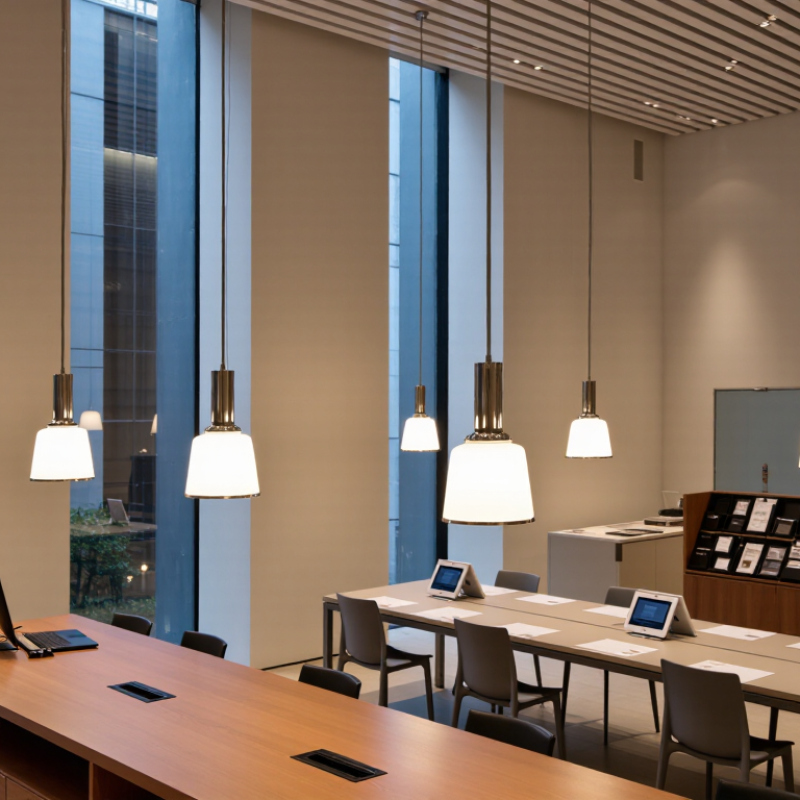
Definition and Core Features of Commercial Pendant Lighting
Commercial pendant lighting is a suspended fixture designed for workplaces, retail spaces, hospitality venues, and public interiors. Its defining feature is simple: the light source hangs below the ceiling using a rod, cable, or stem. This position delivers focused or layered illumination over desks, counters, tables, and circulation areas.
Core features include a housing, LED module, driver, suspension system, and optical diffuser or reflector. The driver converts building power into a stable current for the LED. Optics then shape the beam, while diffusers soften harsh brightness. Effective specifications should state lumen output, color temperature, color rendering index, glare control, dimming compatibility, and ingress protection where needed. Small details matter.
The U.S. Department of Energy reports that LED lighting uses at least 75% less energy than incandescent lighting and can last up to 25 times longer. That advantage supports lower maintenance in high-use commercial spaces. However, efficiency alone does not guarantee good lighting. A pendant may save energy yet create glare on a computer screen. A practical review should examine mounting height, reflected light, shadows, and occupant comfort. The definition is useful, but incomplete without performance testing. Lighting professionals often verify these factors through measured illuminance and visual inspections, rather than trusting catalog figures alone.
Main Components and How Pendant Fixtures Operate
Commercial pendant lighting is a suspended fixture designed for focused, comfortable illumination. Its canopy attaches to the ceiling junction box and hides electrical connections. A stem, cable, or rigid rod supports the housing below. Inside, an LED module or lamp produces light, while a driver converts incoming AC power into controlled DC current. The driver also supports dimming and protects the LEDs from voltage changes. A heat sink moves heat away from the light source. Reflectors, lenses, or diffusers then shape the beam and reduce glare.
The U.S. Department of Energy reports that LED lighting uses at least 75% less energy and can last up to 25 times longer than incandescent lighting. That difference matters in retail, hospitality, and office spaces with long operating hours. However, fixture performance depends on more than wattage. IES LM-79 testing evaluates photometric performance, including light output, color, and power consumption. A poorly matched diffuser can still create glare. I have seen layouts fail when pendant height ignored screen reflections and customer sightlines.
Tips: Check the driver’s dimming compatibility before installation. Keep pendants high enough for clear views, but low enough to define the work area. Choose a color temperature that suits the space. Warm light can improve comfort, while neutral white often supports detailed tasks. Review lumen output after installation, because real ceilings, finishes, and spacing can change the result.
Common Commercial Pendant Lighting Types and Applications
Commercial pendant lighting combines a suspended fixture, a light source, optics, and a ceiling-mounted power connection. It works by sending electricity through an LED driver, which regulates current before the LEDs produce light. A diffuser softens glare, while a reflector directs illumination toward desks, counters, or display surfaces.
Common types serve different commercial needs. Direct pendants shine downward and suit reception desks, classrooms, and open offices. Direct-indirect models send light upward and downward, reducing harsh shadows across workstations. Linear pendants work well above long tables or production counters. Decorative globes add visual identity in restaurants and hospitality spaces, but their exposed surfaces may need frequent cleaning. Industrial high-output pendants support warehouses and high ceilings, where narrow optics can place light on aisles instead of empty floor areas.
Application choices should follow measured lux targets, ceiling height, mounting distance, and glare control. The Illuminating Engineering Society provides task-based recommendations for offices, retail areas, and educational spaces. The U.S. Department of Energy reports that LED lighting can use at least 75% less energy and last up to 25 times longer than incandescent lighting. That supports lower maintenance in busy facilities.
Still, efficiency claims can mislead when drivers, controls, and replacement access are ignored. A pendant may look efficient on paper, yet create glare at eye level. Field measurements matter. So does the installer’s experience.
Key Factors for Selecting the Right Pendant Light
Commercial pendant lighting is a suspended fixture designed for focused illumination in shops, restaurants, offices, and public interiors. It works by directing light downward or outward from a ceiling-mounted point. The shade, diffuser, lamp type, and mounting height shape the final effect. A well-selected pendant can brighten a counter without flooding nearby areas.
Selecting the right pendant starts with the task below it. A dining table needs comfortable, low-glare light, while a retail shelf may require stronger illumination. Check lumen output, color temperature, beam spread, and dimming compatibility. Warm light can make hospitality spaces feel inviting. Neutral white often supports accurate product viewing. Size matters too. A fixture that is too small looks weak, while an oversized one can interrupt sightlines. Measure ceiling height and leave safe clearance above walking areas. Electrical requirements should be reviewed by a qualified professional.
Tips: Compare the light distribution with a real floor plan. Test one sample at the intended height before ordering several. Consider maintenance, because difficult-to-reach pendants increase cleaning time and replacement costs. In my experience, appearance often wins early discussions, but glare becomes the real problem later. “Perfect” spacing on paper may feel uneven in a busy room. Recheck the layout from customer eye level.
What Is Commercial Pendant Lighting and How Does It Work?
Commercial pendant lights are suspended fixtures that direct electric light onto work surfaces, circulation areas, and display zones. Selecting the right fixture starts with matching the target illuminance to the space and then checking beam spread, color temperature, glare control, mounting height, and energy performance.
Typical target illuminance by commercial application: These indicative values help establish an initial lighting target. Final specifications should be verified against local codes, room geometry, surface reflectance, and the actual task being performed.
Installation, Maintenance, and Safety Considerations
Commercial pendant lighting uses suspended fixtures to direct light over counters, tables, aisles, or reception areas. Its performance depends on more than lamp brightness. The mounting point, ceiling structure, wiring, and operating conditions must work together.
Installation should begin with the electrical supply switched off at the breaker. A qualified electrician should verify that the circuit is dead, inspect the junction box, and confirm that the ceiling can support the fixture’s weight. The pendant must be level and positioned away from doors, sprinklers, moving equipment, and customers’ head height. Grounding is essential. Local electrical requirements also matter. A small measurement error can create glare or a collision risk. That deserves a second check.
Maintenance starts with isolation from power. Staff can wipe the shade and diffuser with a dry, soft cloth, but liquids should never enter the socket or housing. Inspect suspension cables, screws, insulation, and connection covers during scheduled checks. Watch for flickering, unusual heat, discoloration, buzzing, or a burning smell. These signs require immediate shutdown and professional inspection. Dust can trap heat, especially in enclosed commercial spaces. LED sources usually need less replacement, but they are not maintenance-free. Records of inspections and repairs improve accountability. I have found that rushed cleaning often misses loose hardware, which is why a simple checklist is worth using. Safety labels should remain visible, and damaged parts should not be improvised or repaired with unsuitable materials.
FAQS
It is a suspended fixture for offices, shops, hospitality spaces, and public interiors.
Common parts include a canopy, suspension system, housing, LED module, driver, and diffuser.
The driver converts building power into stable current for the LED.
LED lighting can use at least 75% less energy than incandescent lighting.
Review lumen output, color temperature, color rendering, glare control, and dimming compatibility.
Install pendants high enough to preserve clear views.
Yes, especially when optics, mounting height, or surface finishes are poorly matched.
Measure illuminance and inspect shadows, reflections, color, and occupant comfort.
Conclusion
Commercial Pendant Lighting refers to suspended light fixtures designed to provide focused, practical, and visually appealing illumination in commercial environments such as offices, retail stores, restaurants, hospitality spaces, and public facilities. Unlike ceiling-mounted fixtures, pendant lights hang from a cord, rod, or suspension system, allowing light to be positioned at a useful height. Their main components typically include a housing, light source, reflector or diffuser, suspension hardware, and electrical connections. Together, these parts direct, soften, or distribute light according to the needs of the space.
Common types include downlight pendants for task lighting, decorative pendants for atmosphere, linear pendants for workstations, and adjustable fixtures for flexible layouts. Selecting the right pendant requires considering brightness, color temperature, energy efficiency, ceiling height, room function, appearance, and compatibility with control systems. Proper installation should use secure mounting points and correctly rated electrical components. Regular cleaning, inspection, and timely replacement of damaged parts help maintain performance and safety. When thoughtfully selected and maintained, Commercial Pendant Lighting can improve visibility, comfort, efficiency, and the overall character of a commercial interior.