ETL / UL Certified · ADA, Energy Star & Title 20/24 Options · Hospitality · Multifamily · Senior Living
0%

Choosing the right decorative fixture involves more than admiring its shape. Custom Decorative Lighting can transform a quiet hallway, dining room, hotel lobby, or boutique entrance. Yet beauty must work with safety, scale, maintenance, and daily use.

This guide introduces ten popular types buyers may consider, including pendant lights, chandeliers, wall sconces, linear fixtures, and sculptural installations. Each option creates a different visual rhythm. A cluster of hand-blown glass pendants may soften a dining table, while a brass chandelier can establish a stronger focal point. Ceiling height matters. So does viewing distance.

Practical buying decisions should include lumen output, color temperature, dimming compatibility, material quality, and installation access. A warm 2700K tone may suit a restaurant, while a retail space could need clearer illumination. Buyers should also check wiring requirements and applicable local certifications. Requirements differ by market, so supplier documentation deserves careful review.

Details matter.

In real projects, attractive samples sometimes disappoint after installation. Finishes can appear darker, glass can scatter light unevenly, and oversized fixtures may overwhelm a small room. This guide therefore balances design appeal with measurable performance. It also recognizes that customization can involve trade-offs. A complex shape may require longer production, specialized cleaning, or higher replacement costs. The best choice is not always the most dramatic one. It is the fixture that suits the space, budget, users, and long-term expectations.
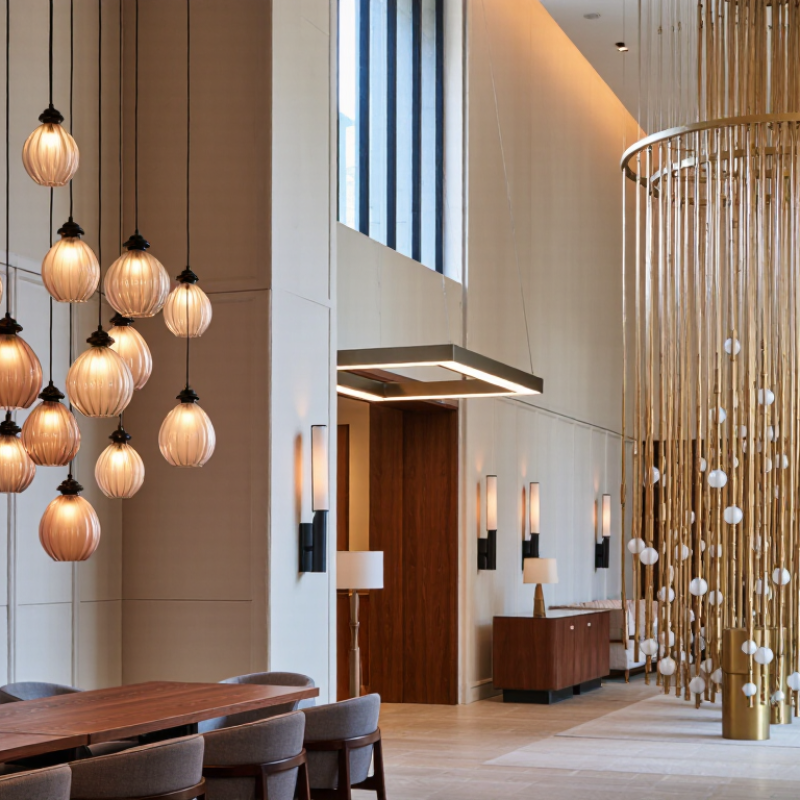
Top 10 Types of Custom Decorative Lighting for Buyers?

Define Custom Decorative Lighting: Scope, Terms, and Buyer Requirements

Custom decorative lighting is made for visual character, not illumination alone.

Its scope includes ten common forms: pendants, chandeliers, wall sconces, table lamps, floor lamps, linear fixtures, cove lighting, track lights, sculptural pieces, and outdoor lanterns. Each type can be adjusted in size, finish, shade, mounting method, and light distribution.

Buyers should separate key terms carefully. Lumens describe brightness, while color temperature describes warmth or coolness. CRI indicates how naturally colors appear under the light.

Beam angle affects the spread across a table, wall, or artwork. Dimming, voltage, IP rating, and heat control also matter.

A beautiful fixture can still fail if it creates glare, blocks sightlines, or cannot fit the junction box.

Measure the room before requesting a quotation.

Record ceiling height, mounting points, furniture dimensions, and cleaning access. Ask for drawings, material samples, photometric data, lead time, replacement parts, and applicable safety documentation.

In practice, a small mock-up often reveals problems that renderings hide. I have seen oversized shades dominate a room and warm light change the appearance of wood.

That mistake is easy to make. Buyers should question the first design, test the light at night, and allow modest revisions before production.

Map the Top 10 Types by Function: Pendants, Chandeliers, and Sconces

Custom decorative lighting works best when its form follows the room’s daily function. In residential projects, I map ten practical types:

task pendants over worktops
island pendants for balanced food preparation
cluster pendants for stairwells
dining chandeliers for shared meals
linear chandeliers over long tables
statement chandeliers for entry halls
wall sconces for soft corridor light
picture sconces for artwork
vanity sconces for even facial lighting
reading sconces beside beds or chairs.

Pendants usually create focused pools of light, so their height matters. Over an island, keep the lower edge high enough for clear conversation. Clusters can feel dramatic, but uneven spacing often looks accidental. Chandeliers spread attention across a room. Choose a wider frame for a long table, and check ceiling height before selecting a low-hanging design. A beautiful fixture can still become a daily obstacle.

Sconces add depth because light reaches walls, not just floors. Place paired vanity sconces near face level, then test the shadows with a temporary lamp. Custom sizing should consider bulb warmth, dimming range, color rendering, and the surface behind the fixture. I have seen polished drawings fail after installation because the wall texture reflected too much glare. Small samples help. They are not glamorous, but they prevent expensive revisions. Ensure each fitting suits its location and receives qualified installation.

Compare Ceiling, Wall, Linear, Cove, Track, Table, and Floor Fixtures

Custom decorative lighting now combines visual character with measurable performance. The IEA’s Energy Efficiency 2023 report estimates that lighting uses about 15% of global electricity. That makes efficient specification practical, not decorative only.

Ceiling fixtures provide broad ambient light, while chandeliers create a stronger focal point. Pendants suit islands and dining tables. Flush and semi-flush fittings work better under low ceilings. Wall sconces add gentle layers beside mirrors, beds, or artwork. Linear fixtures distribute light evenly across long counters. Cove lighting hides the source and produces a soft architectural glow. Track lighting offers adjustable accents for changing displays. Table lamps add intimate pools of light. Floor lamps support reading corners and vertical balance. These are ten useful categories, but each requires different beam angles, mounting heights, and control methods. The U.S. Department of Energy’s solid-state lighting research highlights efficacy, color quality, controls, and service life as key specification factors. Buyers should compare delivered lumens, not wattage alone.

Tips: Request a lighting layout before ordering custom sizes. Check color temperature in the actual room. Warm light can soften wood, but may dull blue or green finishes. Confirm dimmer compatibility and driver access. I often see beautiful linear fixtures installed too high; the room then feels flat. That mistake is easy to prevent, yet frequently overlooked. Leave space for maintenance, especially inside cove details and ceiling recesses. Specification sheets can be incomplete, so ask for photometric files and tested lifetime data.

Top 10 Types of Custom Decorative Lighting for Buyers? – Compare Ceiling, Wall, Linear, Cove, Track, Table, and Floor Fixtures

Buyer comparison of common decorative fixture types, typical specifications, applications, and customization considerations.

Type Typical Mounting Common Custom Size Typical Light Source Typical CCT Best Applications Key Customization Options Buyer Considerations
1. Chandeliers Ceiling-suspended 600–2,400 mm diameter; 300–1,800 mm height Replaceable LED lamps or integrated LED modules 2,700–3,000 K Dining rooms, hotel lobbies, stairwells, reception areas Tier count, frame finish, crystal or glass elements, suspension length, dimming Check ceiling load, installation access, cleaning requirements, and viewing height.
2. Pendant Lights Single or multi-drop ceiling suspension 150–800 mm diameter; 150–2,000 mm drop LED bulb, COB LED, or LED strip 2,700–4,000 K Kitchen islands, cafés, bedside areas, retail displays Shade shape, cord or rod length, canopy size, diffuser, finish, beam angle Use multiple pendants for balanced coverage and confirm glare control over work surfaces.
3. Flush and Semi-Flush Ceiling Fixtures Directly against ceiling or with a short stem 300–1,200 mm diameter; 80–300 mm height Integrated LED or replaceable LED lamps 2,700–3,500 K Bedrooms, corridors, low-ceiling rooms, compact hospitality spaces Profile thickness, diffuser material, decorative trim, sensor, dimming A practical choice where head clearance is limited; verify driver access for maintenance.
4. Wall Sconces Surface-mounted on a wall 100–500 mm width; 100–800 mm height; 80–250 mm projection LED module, LED bulb, or linear LED board 2,700–3,000 K Bedrooms, corridors, bathrooms, restaurants, feature walls Up-light/down-light pattern, shade material, backplate, switch, wet-location rating Confirm junction-box position, projection clearance, and required ingress protection.
5. Linear Suspension Fixtures Ceiling-suspended by cables or rods 600–3,000 mm length; 50–150 mm width Integrated linear LED 3,000–4,000 K Conference tables, dining tables, kitchen counters, workspaces Length, continuous or segmented layout, direct/indirect output, optics, controls Coordinate fixture length with furniture; check uniformity, glare rating, and driver location.
6. Cove and Indirect Lighting Concealed in ceiling, wall, or architectural recesses Flexible lengths; commonly 5–20 m per circuit LED tape, linear LED modules, or profile systems 2,700–4,000 K; RGB/RGBW for color effects Ceilings, wall washes, bars, hospitality interiors, media rooms Tape density, aluminum profile, diffuser, color tuning, cutting lengths, controls Plan ventilation, access for replacement, voltage drop, and a suitable heat-dissipation path.
7. Track Lighting Ceiling- or wall-mounted track 1–3 m standard runs; custom linked layouts available Adjustable LED spotheads or pendant adapters 2,700–4,000 K Galleries, retail stores, kitchens, living rooms, display walls Track shape, head count, beam angle, adapters, control zones, finish Allow for future aiming and rearrangement; confirm circuit capacity and track compatibility.
8. Table Lamps Portable, placed on furniture 250–600 mm height; 150–400 mm diameter LED bulb, integrated LED, or rechargeable LED 2,700–3,000 K Bedside tables, consoles, desks, reception counters Base material, shade, switch type, USB charging, battery, cord length Consider stability, shade glare, cable management, battery runtime, and charging access.
9. Floor Lamps Portable, freestanding 1,200–2,000 mm height; 250–600 mm base diameter LED bulb, integrated LED, or uplight LED module 2,700–3,500 K Living rooms, reading corners, hotel lounges, office breakout areas Arc radius, pole height, base weight, shade, foot switch, dimming Check tipping resistance, walkway clearance, outlet position, and cord protection.
10. Decorative Recessed Fixtures Recessed into ceiling, wall, floor, or joinery 50–300 mm aperture; depth varies by housing Integrated LED, adjustable spotlight, or wall-wash optic 2,700–4,000 K Artwork, niches, corridors, staircases, feature ceilings Trimless or flanged finish, aperture, beam angle, glare shield, trim color, IP rating Coordinate cut-out, ceiling depth, insulation clearance, driver access, and local electrical code.
Note: Dimensions, color temperatures, and configuration ranges are typical planning values for decorative LED lighting. Final specifications should be confirmed against the project layout, electrical requirements, mounting conditions, photometric performance, and applicable local codes.

Set Performance Targets: DOE LEDs Use 75% Less Energy and Last 25× Longer

Custom decorative lighting can include pendants, chandeliers, wall sconces, picture lights, vanity fixtures, table lamps, floor lamps, recessed accents, linear strips, and outdoor lanterns. Buyers should judge each type by appearance and measurable performance. The DOE reports that LEDs use about 75% less energy and last up to 25 times longer than incandescent lamps. These figures should become practical purchasing targets, not empty marketing language.

For example, replacing a 60-watt incandescent lamp with a 15-watt LED can reduce energy use substantially. A lamp used three hours daily also produces less heat around artwork, wood, and fabric shades. Longer service life matters in high ceilings and difficult installations. However, decorative LEDs do not perform equally. Check the fixture’s color rendering, dimming range, driver quality, and heat management. Warm light around 2700K may suit a dining room, while 3000K can sharpen a hallway or display wall.

Details matter.

In project work, I have seen attractive fixtures fail because their drivers were poorly ventilated. Some dimmers also create flicker, buzzing, or uneven brightness. That is an uncomfortable reminder: efficiency alone is not enough. Ask for tested lumen output, rated life, replacement information, and suitable controls. A 25-times-longer claim may describe the LED module, not every fixture component. Buyers should verify the complete assembly before approving a custom order.

Top 10 Types of Custom Decorative Lighting for Buyers

Representative fixture power comparison: traditional incandescent load versus an LED design target based on DOE efficiency guidance.

The representative LED configurations use approximately 75% less electricity than comparable incandescent configurations while delivering similar decorative illumination. DOE guidance also indicates that residential LEDs can last up to 25 times longer than incandescent lamps. Actual wattage depends on fixture size, lamp count, brightness, and dimming requirements.

Verify Quality and Safety: ENERGY STAR CRI 80+, IES Metrics, UL, and ETL

Custom decorative lighting should look beautiful, but appearance cannot prove quality. Ask for an ENERGY STAR qualification when the fixture category allows it. This indicates tested energy performance and efficiency. Also check a color rendering index of CRI 80 or higher. For dining rooms, galleries, and retail displays, higher CRI can reveal more natural colors. Still, CRI alone is not enough. Review the measured color temperature, lumen output, dimming range, and power consumption. Small differences become obvious beside wood, fabric, or painted walls.

Request an IES photometric file before approving the design. It can show beam angle, light distribution, delivered lumens, and uniformity. Compare those figures with the room layout, not only the product photograph. A narrow beam may create harsh spots on a long table. I have seen attractive samples fail this practical test. Verify whether the exact model, driver, and finish are covered by UL or ETL certification. Check the certification listing, not just a printed mark on the fixture. Confirm installation conditions, wiring requirements, temperature limits, and damp-location suitability. Ask for current test documents from the supplier. Be cautious when documents use vague language. Custom modifications can change compliance status. That detail is easy to miss. A qualified electrician should review the final assembly and installation. Mistakes still happen, especially with imported components and late design changes.

FAQS

What does custom decorative lighting include?

It includes pendants, chandeliers, sconces, table lamps, floor lamps, and outdoor lanterns. Sculptural fixtures count too. Buyers can adjust size, finish, shade, mounting, and light distribution.

What should buyers measure before requesting a quotation?

Record ceiling height, mounting points, furniture sizes, and cleaning access. Check the junction box location carefully. A beautiful fixture may not fit.

Which lighting measurements matter most?

Lumens indicate brightness. Color temperature shows whether light looks warm or cool. CRI describes color accuracy. Beam angle controls light spread across tables, walls, or artwork.

What color temperature suits common rooms?

Around 2700K can create a warm dining atmosphere. Around 3000K may suit hallways or display walls. Test samples at night. Colors can change unexpectedly.

How can buyers compare energy performance?

Compare wattage, delivered lumens, rated life, and heat output. A 15-watt LED can replace a 60-watt incandescent lamp in some applications. Longer life helps with high ceilings. But efficiency alone is not enough.

What problems can custom decorative fixtures create?

Poor ventilation can overheat the driver. Some dimmers cause flicker, buzzing, or uneven brightness. Glare may spoil artwork or block sightlines. I would question the first design.

What documents should buyers request?

Ask for drawings, material samples, photometric data, lead time, and replacement information. Request current safety documents and installation requirements. A small mock-up can reveal problems that renderings hide.

How should buyers verify lighting quality and safety?

Request measured lumen output, color data, dimming range, and power consumption. Review the exact fixture, driver, and finish in the certification records. Do not rely on a printed mark alone. A qualified electrician should inspect the final assembly.

Why is a photometric file useful?

It shows beam angle, light distribution, delivered lumens, and uniformity. Compare these figures with the room layout. A narrow beam may create harsh spots on a long table. Photos can mislead.

Conclusion

Custom Decorative Lighting refers to made-to-order or carefully specified fixtures designed to enhance both the appearance and function of an interior or exterior space. Buyers should begin by defining the project’s style, dimensions, installation requirements, materials, finish, controls, and budget. The main categories include pendants, chandeliers, sconces, ceiling fixtures, wall lights, linear systems, cove lighting, track fixtures, table lamps, and floor lamps. Each type serves a different purpose, from creating a focal point and providing task lighting to delivering ambient illumination or highlighting architectural details.

A successful selection balances design with measurable performance. Buyers should compare light distribution, brightness, color temperature, dimming capability, glare control, and installation flexibility. Efficient LED systems can use about 75% less energy and last up to 25 times longer than traditional bulbs. Quality checks should include a color rendering index of 80 or higher, recognized lighting-performance measurements, reliable heat management, and certification from qualified electrical safety testing organizations. These steps help ensure that Custom Decorative Lighting is attractive, durable, efficient, and appropriate for the intended space.


Oliver

Oliver

Oliver is a dedicated marketing professional with a deep understanding of the company’s products, customers, and industry landscape. With a strong combination of strategic thinking, market insight, and practical experience, he plays an important role in communicating the value of the company’s......