ETL / UL Certified · ADA, Energy Star & Title 20/24 Options · Hospitality · Multifamily · Senior Living
0%

Choosing the right Hospitality Lighting Fixtures is rarely a simple style decision. A lobby chandelier may create a memorable first impression, while discreet wall lights can make corridors feel safer and calmer. In restaurants, pendant fixtures should reveal food accurately without producing harsh glare. Guestroom lighting must also support reading, dressing, relaxing, and late-night movement.

This guide examines the top fixture types used across hotels, resorts, restaurants, and event spaces. It considers visual comfort, color rendering, energy efficiency, maintenance access, and control flexibility. These details matter. A warm 2700K light may suit a lounge, but it can weaken color accuracy in a breakfast area. A dramatic fixture may photograph beautifully, yet become difficult to clean or replace.

Practical experience often exposes what product images hide. Dust collects above dining tables. Bright downlights can reflect across polished stone. Poorly positioned bedside fittings may cast shadows on a book. Reliable hospitality design therefore balances atmosphere with daily operation, safety expectations, and long-term value. Product data, installation guidance, and local professional review remain essential.

There is no universal winner. The best choice depends on ceiling height, room function, guest behavior, and maintenance routines. Even experienced teams can overlook glare during a busy installation. A careful mock-up can reveal these weaknesses before opening day. This overview compares chandeliers, pendants, sconces, recessed lights, track systems, and outdoor fixtures, helping readers identify solutions that look refined and perform consistently.
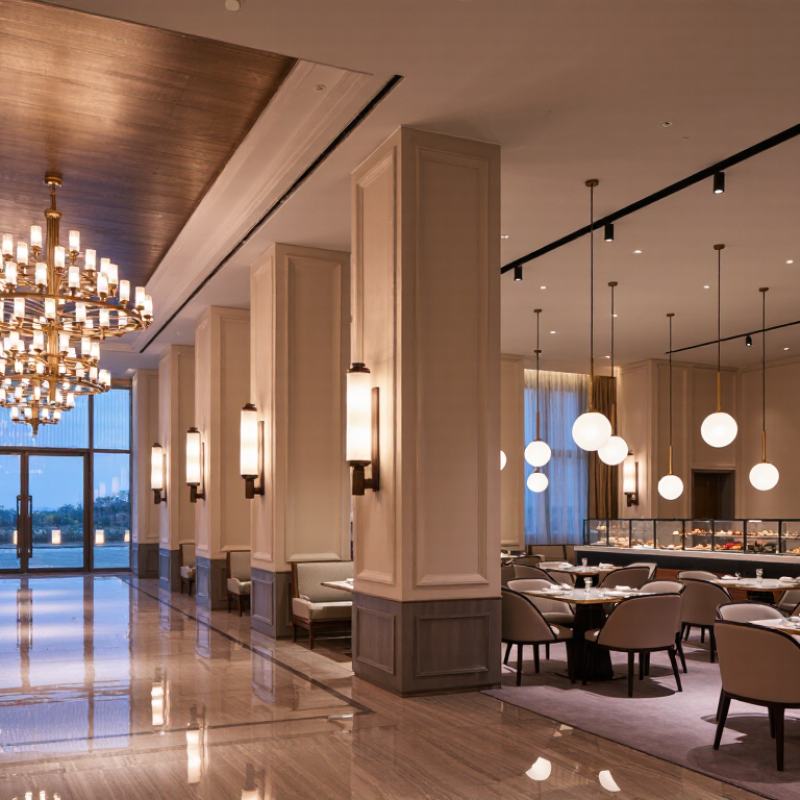
What Are the Top Hospitality Lighting Fixtures?

LED Downlights: The 75% Energy-Saving Standard for Hotel Interiors

What Are the Top Hospitality Lighting Fixtures?

LED Downlights: The 75% Energy-Saving Standard for Hotel Interiors

LED downlights are now a practical choice for hotel interiors. They can reduce lighting energy use by about 75% compared with older halogen fixtures. The exact result depends on wattage, operating hours, controls, and the existing installation. The figure is useful, but it is not automatic.

A well-designed guest room often uses warm white light near 2700K to 3000K. This creates a calmer atmosphere around beds, desks, and lounge chairs.

High color rendering also helps fabrics, wood, and food appear more natural. Deep-set optics can reduce glare on mirrors and glossy tables. Small details matter.

Bathrooms need suitable moisture protection. Corridors require even spacing and reliable illumination. Dimming systems can lower output during quiet hours without making spaces feel unsafe. In practice, poor beam angles may create dark patches, even with efficient fixtures. That mistake deserves attention.

Hotel managers should compare measured lux levels, connected load, and maintenance records before approving replacements. A lower wattage is not enough. Drivers, heat control, and accessible components affect long-term reliability. Some installations promise 75% savings, yet deliver less because lights operate continuously. Meter readings after installation provide stronger evidence than estimates.

Guestroom Sconces and Pendants: Applying 2700–3000K Warm Lighting

Guestroom lighting should feel welcoming before guests notice the furniture. In hotel lighting evaluations, 2700K often creates a calm, residential mood beside the bed. A 3000K source feels cleaner near desks, mirrors, and reading chairs. Both temperatures suit hospitality interiors. The choice depends on wall color, textiles, daylight, and room purpose. Too much warmth can make beige finishes appear dull. I have seen that mistake. Sconces should place light near the pillow without shining into a guest’s eyes. Adjustable shades help, but their hinges may loosen after repeated cleaning. Specify durable hardware and test it in an occupied-looking room.

Pendants can create a memorable focal point above a nightstand or lounge table. Their lower edges need careful clearance near tall headboards. Choose diffused lenses or fabric-like shades to soften bright points. Dimming is essential. Guests may want gentle light at midnight and stronger illumination while unpacking. Warm-white LEDs with high color rendering keep skin tones and artwork believable. Do not judge a fixture from a catalog image alone. Install a sample and inspect it from the bed, desk, and doorway. One concern remains: 2700K is not automatically comfortable. Poor shielding, uneven dimming, or excessive brightness can ruin the experience. A slightly imperfect mock-up often reveals more than a polished presentation. Record glare, shadows, switch locations, and maintenance access before approving the final layout.

Lobby Chandeliers and Linear Fixtures: Creating Layered 3-Level Illumination

Lobby chandeliers and linear fixtures can shape a lobby’s first impression. They also determine how safely visitors move through the space. In my lighting experience, a layered three-level scheme works better than one dramatic fixture. The chandelier provides ambient light and a clear visual focus. Its glow should reach seating areas without creating harsh shadows on faces. Keep the lowest crystal or metal element well above circulation paths.

The second level comes from linear fixtures integrated into ceilings, coves, or wall details. These fixtures guide the eye toward reception desks and elevators. Continuous lines can make a narrow lobby feel wider. Use controlled optics to reduce glare on polished stone floors. A soft, neutral color temperature usually supports both skin tones and architectural finishes. Test it at night. Daylight can hide problems.

The third level uses discreet accent lighting for artwork, columns, signage, and texture. Small changes in beam angle can reveal marble veining or wood grain. Not every surface needs emphasis. Too many highlights make the lobby visually restless. Dimming controls allow staff to adjust scenes for morning arrivals, busy evenings, and events. I have seen beautiful chandeliers fail because nearby linear fixtures were too bright. That mistake is easy to repeat. A mock-up with real finishes often exposes it before installation. Good lighting is not only decorative; it must remain comfortable after hours of observation.

Bathroom Vanity Lights: Achieving 90+ CRI for Accurate Color Rendering

Bathroom Vanity Lights: Achieving 90+ CRI for Accurate Color Rendering

In hospitality bathrooms, vanity lighting affects how guests see skin, hair, makeup, and fabric colors. A 90+ CRI fixture can reveal warmer skin tones and reduce gray or green casts around the mirror. That detail matters during grooming. It also influences perceived cleanliness.

However, CRI alone is not enough. The Illuminating Engineering Society’s TM-30 method evaluates color fidelity through Rf and color gamut through Rg. Designers should request TM-30 data, not only a CRI number. A fixture may advertise 90+ CRI yet render certain red tones weakly. This is an uncomfortable limitation.

Use vertically distributed fixtures beside the mirror, rather than one bright source above it. This reduces shadows beneath the eyes and chin. Choose a neutral color temperature, commonly between 3000K and 3500K, for a calm but accurate appearance.

The U.S. Department of Energy reports that LED lighting can use at least 75% less energy and last up to 25 times longer than incandescent lighting. Efficiency still needs control. Excessive brightness can create glare, especially on polished stone and glass. In practical installations, I would test the actual fixture with sample tiles, towels, and skin tones before approval. Photometric files cannot reveal every experience.

Outdoor Pathway Fixtures: Combining IP65 Protection with Long LED Life

What Are the Top Hospitality Lighting Fixtures?

Outdoor Pathway Fixtures: Combining IP65 Protection with Long LED Life

Outdoor pathway fixtures shape the first impression of a hotel, resort, or restaurant after sunset. They should guide guests clearly without creating harsh glare. A well-designed fixture places light on the walking surface, not directly into the eyes.

IP65 protection is an important starting point. The first “6” indicates complete dust protection. The “5” means resistance against water jets from different directions. It does not mean the fixture can survive flooding or permanent submersion. Installers should still provide proper drainage and avoid low points where rainwater collects.

Long LED life depends on more than the LED chip. Heat control, driver quality, wiring, and local weather all affect performance. In field inspections, fixtures with blocked ventilation often show early dimming or color changes. That detail is easy to miss. Aluminum housings, sealed connections, and corrosion-resistant finishes can improve reliability near gardens or coastal areas. A warm color temperature around 2700K to 3000K usually feels welcoming, while adequate color rendering helps guests recognize steps and surface changes.

Spacing also requires careful testing. Fixtures placed too close together may waste energy and flatten the landscape’s character. Excessive spacing can create dark gaps.

A short evening walk-through often reveals problems that drawings cannot.

Even durable lighting needs cleaning, inspection, and occasional driver replacement. Long LED life is useful, but it is not a maintenance-free promise.

FAQS

How much energy can LED downlights save in hotel interiors?

They can reduce lighting energy use by about 75% compared with older halogen fixtures. The result varies. Operating hours, wattage, controls, and existing wiring affect actual savings. Meter readings after installation provide better evidence than estimates.

What color temperature suits hotel guest rooms?

Warm white light between 2700K and 3000K usually creates a welcoming atmosphere. Around 2700K feels calmer beside beds. Around 3000K appears cleaner near desks, mirrors, and reading chairs. Room finishes and daylight can change the result.

How can guestroom sconces improve comfort?

Sconces should place light near the pillow without shining into the guest’s eyes. Adjustable shades can help. Their hinges may loosen after repeated cleaning, so durable hardware deserves testing. Inspect the fixture from the bed before approval.

Are pendants suitable beside hotel beds or lounge tables?

Pendants can create a strong focal point above nightstands and lounge tables. Maintain safe clearance near tall headboards. Diffused lenses can soften bright points. Dimming lets guests choose gentle midnight light or stronger unpacking light.

Why is high color rendering important in hospitality lighting?

High color rendering helps fabrics, wood, artwork, food, and skin tones appear more natural. This detail affects comfort and perceived quality. Catalog images can mislead. Install a sample and inspect it from several room positions.

What lighting protection do hotel bathrooms require?

Bathroom fixtures need suitable moisture protection for the installation area. The exact requirement depends on exposure and local standards. Check the selected fixture before installation. A bright fixture is not automatically a suitable fixture.

How should hotel lobbies use chandeliers and linear fixtures?

A layered three-level plan often works better than one dramatic fixture. The chandelier provides ambient light and visual focus. Linear fixtures guide attention toward reception areas and elevators. Accent lighting can reveal artwork, columns, signs, marble, or wood grain.

How can hotel lighting avoid glare and dark patches?

Deep-set optics can reduce glare on mirrors and glossy tables. Controlled beam angles help prevent dark patches in corridors and rooms. Polished floors may reflect excessive brightness. Test the lighting at night. Daylight can hide problems.

What should managers measure before replacing hotel lighting?

Compare measured lux levels, connected load, maintenance records, and operating hours. Lower wattage alone does not prove better performance. Drivers, heat control, and maintenance access affect reliability. A slightly imperfect mock-up may reveal problems earlier.

Conclusion

Hospitality Lighting Fixtures play a central role in creating comfortable, attractive, and energy-efficient hotel environments. LED downlights are an excellent standard for hotel interiors, helping reduce energy consumption by up to 75% while providing consistent general illumination. In guestrooms, sconces and pendants using warm color temperatures between 2700K and 3000K can create a welcoming and relaxing atmosphere. These fixtures also add visual character while supporting practical bedside or reading lighting needs.

In public areas, lobby chandeliers and linear fixtures can be combined to form a layered three-level lighting design, balancing ambient, accent, and task illumination. Bathroom vanity lights should provide a color rendering index of 90 or higher to ensure accurate skin tones and makeup application. For outdoor walkways, pathway fixtures with IP65 protection offer resistance to dust and water, while long-life LED technology supports reliable performance, lower maintenance, and safer guest movement around the property.


Amelia

Amelia

Amelia is a professional marketing specialist with a strong understanding of product strategy, customer needs, and digital communication. As a valued member of our company, she combines practical marketing experience with detailed knowledge of our products, helping customers clearly understand how......