Explore our spec-ready portfolio of CE-certified lowbay and linear industrial fixtures engineered for warehouses, commercial spaces, manufacturing plants, and retail facilities.
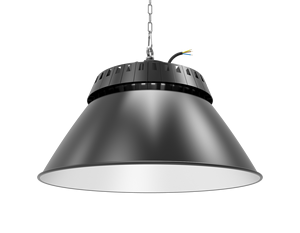
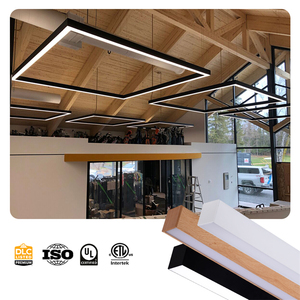
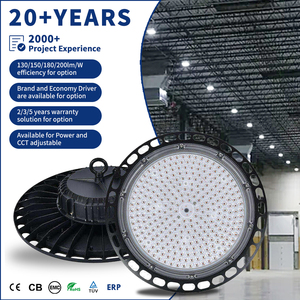
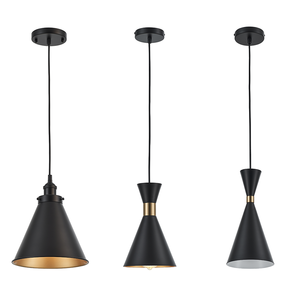
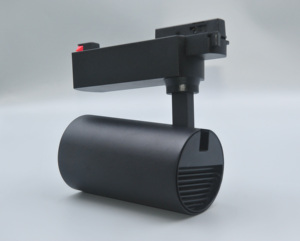
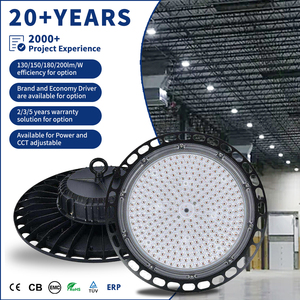
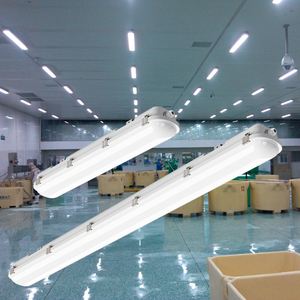
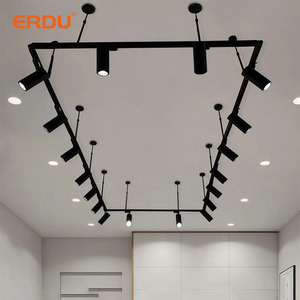
As a leading CE Certified Lowbay Lights Manufacturer and Exporter, our manufacturing footprint is engineered around precision photometric design, robust thermal dynamics, and stringent European electrical safety standards. Lowbay lighting systems operate in low-to-medium ceiling heights (typically between 3.5 meters and 7 meters / 12 to 22 feet). Unlike highbay fixtures that utilize concentrated optics for long-distance projection, lowbay luminaires demand sophisticated beam spread management to avoid harsh glare while ensuring uniform lux distribution across task areas, aisles, and commercial floors.
Every commercial and industrial lowbay fixture leaving our production line undergoes rigorous testing to satisfy European Conformity standards. Our technical documentation dossiers encompass all mandatory EU directives required by electrical inspectors and procurement auditors:
Verified under EN 60598-1 and EN 60598-2-1 safety protocols. Ensures dielectric strength, creepage distance, flame resistance, and electrical insulation across 100V-277V operational environments.
Compliant with EN 55015, EN 61547, and EN 61000-3-2. Guarantees near-zero electromagnetic interference with sensitive industrial equipment, wireless networks, and automation systems.
Strict restriction of hazardous substances (lead, mercury, cadmium, hexavalent chromium, PBBs, PBDEs). Safe for cleanrooms, food processing facilities, and eco-certified buildings.
Exempt Group (RG0) / Low Risk (RG1) classification. Prevents blue light hazards and flickering, ensuring workplace safety for operators under multi-shift operation.
Understanding the engineering distinction between lowbay and highbay luminaires is essential for B2B purchasing agents, electrical engineers, and lighting specifiers. The table below outlines the core photometrics, thermal management, and electrical parameters standard across our CE-certified lowbay production lines.
| Technical Feature | Commercial Lowbay Specification | Industrial Highbay Comparison | Engineering Benefit |
|---|---|---|---|
| Optimal Mounting Height | 3.5m – 7.0m (12ft – 22ft) | 7.0m – 15.0m+ (22ft – 50ft+) | Prevents hotspot creation & intense shadows in low ceiling facilities |
| Beam Angle & Distribution | 90° / 120° Wide / Frosted Diffuser | 60° / 90° Narrow Reflector Optics | Uniform lux coverage with UGR < 19 optical comfort |
| Luminaire Efficacy | 140 lm/W – 165 lm/W system level | 150 lm/W – 180 lm/W system level | Optimized energy savings without glare discomfort |
| Luminous Flux Range | 4,000 lm – 24,000 lm | 18,000 lm – 60,000 lm | Right-sized lumen output for workbenches, aisles & offices |
| Driver & Control Options | 0-10V, DALI-2, Motion/Daylight Sensor | 0-10V, DALI-2, High-Bay PIR Sensor | Supports automated daylight harvesting and emergency back-up |
| Thermal Management | Cold-forged A380 Aluminum Fin Array | Extruded Aluminum Pin Heat Sink | Maintains junction temperature (Tj < 75°C) for extended lifespan |
| Impact & Ingress Rating | IP65 Waterproof / IK08 Impact | IP65/IP66 Waterproof / IK10 Impact | Resistant to high humidity, dust, and mechanical impacts |
As global supply chains shift toward decarbonization, automated building management, and employee wellness, the market for lowbay luminaires is experiencing rapid technological elevation. As an exporter servicing Europe, the Americas, and the APAC region, we synthesize key sourcing trends transforming lowbay fixture procurement:
Standalone fixtures are rapidly being replaced by interconnected lighting networks. Modern procurement mandates lowbay lights equipped with standard Zhaga Book 18 or 7-pin NEMA receptacles. This allows plug-and-play installation of microwave motion sensors, PIR occupancy detectors, and Bluetooth Mesh nodes. Buildings utilizing automated daylight harvesting reduce overall energy consumption by an additional 30% to 45% beyond basic LED retrofit baseline savings.
Distributors and OEM importers face inventory carrying costs. To streamline SKU management, future-ready lowbay lights feature field-selectable DIP switches for both wattage (e.g., 100W/120W/150W) and color temperature (3000K/4000K/5000K). This flexibility allows a single product SKU to serve multiple ceiling heights and visual tasks, reducing warehouse inventory overhead by up to 60%.
In accordance with the EU Eco-design Directive (SLR/ELR regulations), modern lowbay luminaires must allow independent replacement of the LED light source and electronic control gear without permanent damage to the housing. Our manufacturing processes utilize modular driver trays, toolless access latches, and fully recyclable die-cast aluminum alloys, lowering lifetime maintenance expenditures.
Industrial lowbay lighting is moving beyond basic lumen output to focus on visual acuity and circadian rhythm alignment. High Color Rendering Index (CRI Ra > 90, R9 > 50) and low-flicker drivers (< 1% THD flicker ripple) are now standard requirements for electronics assembly, pharmaceutical processing, premium gym halls, and commercial retail corridors.
Our R&D team continuously integrates breakthroughs in semiconductor physics, optics material science, and thermal engineering into our CE-certified product matrix:
Utilizing high thermal conductivity Metal Core PCBs (MCPCB with 3.0 W/m.K thermal conductivity) coupled with thermal interface materials (TIM). This ensures rapid heat transfer from the LED junction to heat sink fins, keeping lumen depreciation under L80B10 @ 50,000 hours.
Optical-grade PMMA (Polymethyl Methacrylate) and anti-UV Polycarbonate optics with internal micro-structures prevent yellowing, resist chemical vapor exposure, and deliver uniform illumination without multi-shadow artifacts.
Lowbay lights deployed in heavy industrial plants are vulnerable to power surges caused by heavy machinery switching. Our standard driver offerings include integrated 4KV to 10KV surge protection devices (SPD) compliant with IEEE C62.41.2 testing.
Standard housings undergo multi-stage chromate conversion pretreatment followed by architectural-grade electrostatic powder coating. Tested for 500 hours of salt spray exposure (ASTM B117), making them suitable for coastal, agricultural, and humid indoor environments.
Answers to critical questions asked by lighting distributors, project specifiers, electrical contractors, and OEM partners.
The key distinction lies in mounting height and optical beam distribution. Lowbay lights are designed for ceilings below 7 meters (22 feet) and feature wider optics (90° to 120°) or frosted diffusers to spread light evenly without creating harsh glare for workers below. Highbay lights are designed for ceilings above 7 meters and use narrower beam angles (60° to 90°) to project light over long distances to ground level.
All our lowbay light products are fully tested and certified by accredited third-party testing laboratories (such as TÜV Rheinland, SGS, or Intertek). We provide complete CE-LVD and CE-EMC test reports, Declarations of Conformity (DoC), and full photometric IES/LDT files for DIALux simulation validation upon request.
Yes. As a direct manufacturer, we offer complete OEM and ODM customization services. Options include custom laser-engraved logos, client-branded packaging, customized RAL powder-coat housing colors, specialized beam angle lenses (e.g., asymmetric 60°x120° for aisle warehouse lighting), and customized driver configurations (DALI, 1-10V, Motion Sensor integration).
We supply lowbay luminaires with multiple driver control protocols, including 0-10V / 1-10V analog dimming, DALI-2 digital addressable lighting interface, PWM, and Triac phase-cut dimming. Furthermore, we offer wireless control options utilizing Zigbee 3.0 and Bluetooth Mesh protocols for smart building integration.
For standard CE-certified catalogue models, our MOQ starts at 50 to 100 units. For custom OEM specifications or specific RAL color powder coatings, MOQ is typically 200 units. Sample orders are dispatched within 5 to 7 business days, while full container load (FCL) production lead times range between 20 and 30 calendar days.
Our quality management system is certified to ISO 9001:2015 standards. Every production lot undergoes IQC (Incoming Quality Control) on LEDs and drivers, 100% 4-hour high-voltage automated aging tests, IP65 ingress testing, thermal imaging camera inspections, and final OQC (Outgoing Quality Control) before container loading.
Navigating global lighting procurement requires a trustworthy supplier capable of bridging architectural design intent with robust manufacturing execution. Drawing upon decades of combined technical experience across commercial, industrial, hospitality, and residential sectors, our company stands as a dependable manufacturing partner for international importers, engineering firms, and project contractors.
Consolidate your industrial lowbay, linear architectural, commercial track, and IP65 tri-proof light procurement under one certified supplier. We handle engineering submittals, sample approvals, photometric simulations, and consolidated container shipping seamlessly.
Our in-house optical engineering team provides comprehensive DIALux and Relux lighting design reports for your project proposals. We calculate target lux levels, light uniformity (U0), and UGR values to guarantee code compliance before ordering.
We stand behind our build quality with a non-prorated 5-year replacement warranty on all CE-certified lowbay luminaires. In the rare event of a component failure, replacement drivers or module kits are dispatched promptly.
Experienced in shipping to over 70 countries with full export documentation support, including Form E, Certificate of Origin (CO), CE Declarations, SASO, and customs compliance paperwork for seamless port clearance.