High-performance architectural recessed luminaires, linear trunking, and high-bay fixtures fully tested to European safety standards and engineered for long-term project reliability.
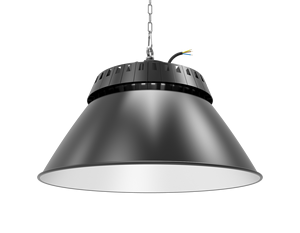
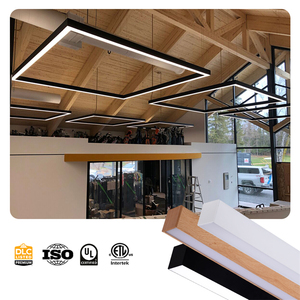
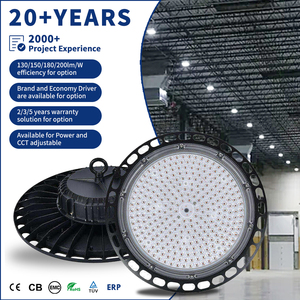
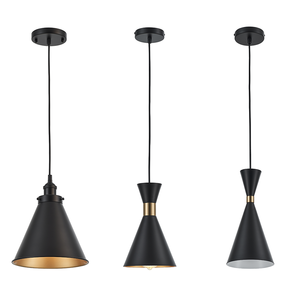
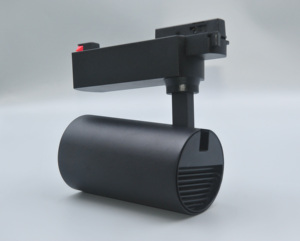
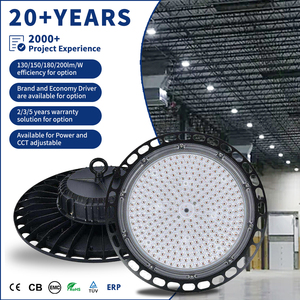
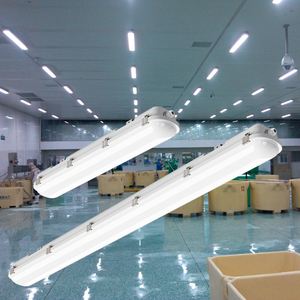
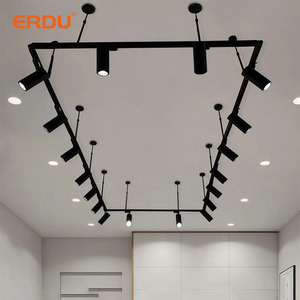
By combining nearly 30 years of hospitality fixture design with over 40 combined years of technical OEM/ODM manufacturing, we bridge the gap between design intent and site-level electrical compliance.
Every recessed fixture is certified to Low Voltage Directive (2014/35/EU) and Electromagnetic Compatibility (2014/30/EU) under strict EN 60598-1 and EN 60598-2-2 testing standards, ensuring seamless entry into the European Economic Area.
Engineered with cold-forged and die-cast aluminum heat sinks maintaining junction temperatures below 75°C. Paired with micro-prismatic optics achieving Unified Glare Ratings under 19 (UGR<19) for human-centric interior comfort.
Consolidate custom decorative lighting, recessed commercial architectural downlights, and mirror packages under a single accountable factory partner with unified submittals, samples, and sub-tier quality audits.
Pre-integrated with premium SELV drivers (Lifud, Tridonic, MeanWell) supporting DALI-2, 0-10V, Phase dimming, Casambi mesh, and Emergency Battery Backup compliance for complex smart building management systems (BMS).
Each production run includes complete spec sheets, photometrics (IES/LDT files), ENEC/CE test reports, fabric/finish swatches, and submittal cut sheets to guarantee zero friction during electrical inspector reviews.
Designed for sustainable building lifecycles. Twist-and-lock bezel structures, quick-connect toolless wiring boxes, and replaceable LED engines minimize maintenance downtime and lower scope-3 carbon footprints.
For commercial lighting buyers, engineering consultants, procurement agents, and architectural specifiers, selecting the right factory partner for recessed downlighting represents a critical intersection of aesthetic intent, thermal performance, and compliance liability. In European and international markets governed by CE standards, a superficial declaration of conformity (DoC) is insufficient to protect contractors and developers from electrical code non-compliance, fire risks, or electromagnetic interference in commercial spaces.
This technical guide evaluates the engineering benchmarks, testing protocols, material science, and global procurement trends that define high-efficiency, CE-certified recessed lighting manufacturing. Whether sourcing for high-density multi-family residential towers, luxury hospitality guestrooms, or large-scale retail environments, understanding the structural and electrical realities of downlight production is essential for risk mitigation.
Core Procurement Metric: A true CE-certified recessed downlight must simultaneously comply with the Low Voltage Directive (LVD 2014/35/EU), Electromagnetic Compatibility Directive (EMC 2014/30/EU), Restriction of Hazardous Substances (RoHS 2011/65/EU), and Ecodesign Directive (EU 2019/2020), supported by third-party laboratory test reports from accredited bodies (such as TÜV, Intertek, or SGS).
Recessed downlights operate in thermally constrained ceiling cavities. Unlike suspended pendants or surface-mounted ceiling fixtures, heat dissipation cannot rely primarily on ambient air convection. Consequently, factory engineering must optimize conductive and radiative heat paths through advanced material selections.
The junction temperature ($T_j$) of the LED chip directly dictates lumen maintenance ($L_{80}/B_{10}$) and color shift ($\Delta u'v'$) over time. Tier-1 manufacturers utilize die-cast aluminum housing (ADC12) or cold-forged 6063 aluminum heat sinks with optimized fin density. Cold-forged aluminum offers a thermal conductivity of ~200 W/m·K, compared to ~96 W/m·K for standard die-cast aluminum, allowing for compact, low-profile recessed housings without compromising thermal equilibrium.
The LED driver represents the primary point of failure in commercial installations. Premium CE-certified fixtures integrate isolated SELV (Safety Extra-Low Voltage) drivers featuring active Power Factor Correction (PFC > 0.95), low total harmonic distortion (THD < 10%), and multi-stage surge protection (2kV to 4kV). Isolation transformers guarantee that secondary DC output circuits remain electrically segregated from line voltage mains, preventing electric shock risks during maintenance.
| Technical Component | Standard Commercial Grade | Tier-1 CE Factory Specification | Project Impact |
|---|---|---|---|
| Heat Sink Metallurgy | Recycled Cast Aluminum (ADC10) | Cold-Forged 6063 Aluminum / ADC12 | 15°C lower $T_j$, prevents premature lumen decay. |
| Driver Isolation | Non-Isolated RC Dropper / Basic | Isolated SELV, Double Insulated (Class II) | Complete shock protection, robust grid immunity. |
| Optical Diffuser | Standard Polystyrene (PS) | Optical-Grade PMMA / Micro-Prismatic PC | Zero yellowing under UV exposure, precise anti-glare. |
| Color Consistency | 5-Step MacAdam Ellipse | ≤ 3-Step MacAdam (SDCM ≤ 3) | Uniform color appearance across large room arrays. |
| Ingress Protection | IP20 (Dry Location) | IP44 / IP65 (Dual-Gasket Sealed) | Protection against moisture, steam, and airborne dust. |
To legally apply the CE mark and pass EU market surveillance audits, recessed luminaires must undergo rigorous physical and electrical verification under the Harmonized European Standards framework:
This standard governs structural integrity, thermal endurance, and fire safety for fixtures embedded in ceiling voids. Key testing parameters include:
Modern commercial specifications enforce strict glare and flicker controls. High-frequency PwM or continuous analog dimming drivers must demonstrate compliance with IEEE 1789 standards to eliminate invisible temporal light modulation (flicker) that induces eye strain, headaches, and fatigue in office and school environments. Photobiological testing according to EN 62471 ensures blue-light hazard risk groups are categorized as RG0 (Exempt) or RG1 (Low Risk).
The international commercial lighting sector is undergoing a structural transition driven by energy efficiency regulations, smart building integration, and decarbonization mandates. B2B buyers must align their procurement strategies with four key industry shifts:
Recessed downlights are expanding beyond static correlated color temperatures (CCT). Modern commercial interiors require multi-channel LED chips (2700K to 6500K) with smooth color mixing optics. Controlled via DALI DT8 or Bluetooth Mesh, these fixtures emulate natural solar cycles, enhancing circadian rhythm regulation in corporate environments, healthcare facilities, and senior living projects.
European environmental directives are placing greater responsibility on manufacturers for whole-life product footprint. Leading OEM factories are shifting away from glued, non-repairable downlight assemblies toward modular constructions. Removable LED light engines, field-replaceable drivers, and toolless driver terminal boxes enable easy repairability, significantly reducing electronic waste (WEEE) and facilitating compliance with circular procurement frameworks.
The integration of micro-sensors (occupancy, daylight harvesting, and indoor positioning) directly into recessed downlight bezels is becoming standard. Wireless protocols such as Casambi, Zigbee 3.0, and Matter-over-Thread eliminate the need for expensive DALI control wiring in retrofit applications, reducing installation labor costs by up to 40%.
Architectural lighting design is moving toward "invisible light sources"—fixtures that provide comfortable ambient or accent illuminance without drawing visual focus to the light emitter itself.
By recessing the LED light engine deep within a parabolic black or specular reflector cone, manufacturers can achieve cut-off angles exceeding 30 degrees. This dramatically lowers Unified Glare Rating (UGR) to below 15, creating a clean ceiling visual plane where the light source is virtually hidden unless standing directly beneath it.
Architectural projects increasingly specify trimless recessed fixtures. These downlights utilize mud-in aluminum plaster rings that install seamlessly into drywall ceilings before taping and painting. The result is a flush, borderless aperture that integrates into modern minimalist interiors.
Standard CRI (Ra > 80) is no longer sufficient for high-end retail, art galleries, or luxury hospitality. Premier CE factories utilize full-spectrum LED chipsets (such as Bridgelux Thrive or Citizen CLU series) that achieve CRI > 97, R9 > 90, and fidelity ($R_f$) scores above 95 under IES TM-30-18 guidelines, ensuring natural color rendering across textiles, wood finishes, and human skin tones.
Technical and commercial clarity for purchasing directors, importers, and project engineers.
While CE is technically a self-declaration mark in Europe, accredited third-party test reports (from labs like Intertek, TÜV, or SGS) for EN 60598-1, EN 60598-2-2, and EN 55015 are required to prove compliance during customs clearance and municipal building authority audits. A factory that provides accredited lab test dossiers mitigates legal liability for the importer of record.
L80/B10 indicates that 90% of a LED fixture batch will maintain at least 80% of initial lumen output at the specified hour mark (e.g., 50,000 hours). Inferior thermal management allows solder point temperature ($T_s$) to exceed manufacturer thresholds, accelerating lumen depreciation and causing noticeable color shifting within 12-18 months of continuous commercial operation.
Yes. Customization options include adjusting cut-out dimensions, specifying custom RAL powder-coat finishes, integrating specific driver brands (e.g., Tridonic, Lifud, Philips Xitanium), requesting custom color temperatures (such as 2700K, 3500K, or Tunable White), and incorporating emergency battery pack modules with self-test functionality.
A complete submittal package includes technical cut sheets detailing mechanical dimensions, electrical input parameters (voltage, wattage, power factor), optical performance (IES/LDT photometrics), color consistency (SDCM ratings), driver dimming protocols, IP/IK ratings, and copies of CE, RoHS, and safety certification certificates.
For general bathroom areas, an IP44 rating is standard to protect against splashing water and steam. For direct shower enclosures or damp exterior soffits, IP65-rated recessed luminaires with silicone gasket seals and corrosion-resistant fasteners are required to prevent water ingress into electrical housings.
Streamline your commercial lighting procurement with spec-ready architectural fixtures, comprehensive engineering dossiers, and competitive OEM direct pricing.