Engineered for low Unified Glare Rating (UGR < 19), high efficacy (up to 160 lm/W), and strict code compliance across international workplace standards.
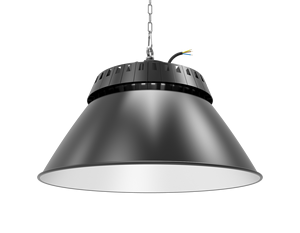
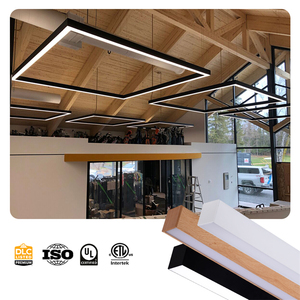
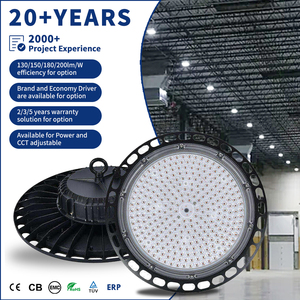
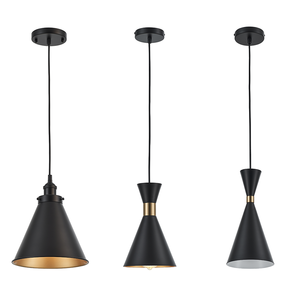
We transform architectural sketches, CAD models, and lighting designer specifications into mass-producible, UL/ETL certified luminaires. Our engineering team routinely performs value engineering to reduce unit costs by 15-30% without sacrificing visual design intent, structural integrity, or photometrics.
Every commercial luminaire is engineered to pass third-party testing for ETL, UL, CE, RoHS, ADA compliance, Title 20/24 energy efficiency, and Energy Star requirements. Backed by more than 70 approved international brand programs, our submittal packages move quickly through owner and architect reviews.
Eliminate project risk by consolidating architectural office lighting, decorative pendants, acoustic linear systems, and illuminated mirror solutions under a unified spec-ready manufacturer. One contact for submittals, photometrics (IES files), control integration, and coordinated international logistics.
The global commercial real estate market is undergoing a seismic structural pivot. Modern workplace strategies no longer treat office lighting merely as an operational utility or a basic overhead expense. Instead, high-performance office illumination is recognized as a vital strategic asset—directly influencing human cognitive performance, employee retention, WELL Building Standard certification, corporate ESG metrics, and overall operational expenditure (OpEx).
China remains the undeniable center of gravity for global Solid-State Lighting (SSL) manufacturing, supplying over 70% of the world’s commercial LED luminaires. However, for international enterprise buyers, procurement managers, lighting designers, and real estate developers, identifying the best office lighting manufacturers and suppliers in China requires navigating a complex matrix of supplier tiers, manufacturing ecosystems, technical standards, and quality control methodologies.
"Procurement leadership in 2026 requires looking beyond FOB unit pricing. The true value of a manufacturing partnership lies in optical engineering rigor, thermal design margins, driver reliability, and the factory's capability to deliver custom linear and architectural configurations on guaranteed project schedules."
Historically, the Chinese lighting manufacturing sector was divided strictly between low-cost commoditized assemblers and specialized state-owned enterprises. Today, the top-tier Chinese manufacturers operate advanced automated Surface Mount Technology (SMT) lines, integrated optical testing laboratories certified by NVLAP and CNAS, and dedicated R&D divisions capable of executing complex OEM/ODM projects within weeks rather than months.
| Evaluation Parameter | Tier-1 China Manufacturers | Mid-Tier Local Suppliers | Trading Companies / Assemblers |
|---|---|---|---|
| Optical Engineering | In-house ray tracing, Custom micro-prism lenses, UGR < 16 | Standard off-the-shelf diffusers, UGR 19-22 | Outsourced design, standard diffusers only |
| LED Binning & Consistency | Single binning, MacAdam 3-Step (SDCM < 3), High CRI (Ra > 90) | 5-Step MacAdam (SDCM < 5), CRI 80 | Variable binning across production batches |
| Driver & Electronics | Tridonic, Osram, Philips Xitanium, or custom DALI-2/0-10V drivers | Unbranded regional drivers, basic 0-10V dimming | Low-cost non-dimmable or basic RC drivers |
| Thermal Management | 6063-T5 Extruded Aluminum, Finite Element Thermal Analysis | Basic cast aluminum, limited thermal testing | Thin stamped metal or PC housings |
| Compliance & Certification | UL, ETL, CE, RoHS, Title 24, Energy Star, FCC, CB | CE, RoHS, minimal North American ETL | Self-declared CE certificates only |
To maintain long-term asset value and avoid premature technological obsolescence, specifiers and B2B buyers must align their procurement strategies with four critical industry transformations driving the office lighting sector:
Circadian-aligned lighting is transitioning from a luxury option to a mandatory requirement in modern Class-A office spaces. Procurement leads are demanding dynamic Tunable White systems (2700K to 6500K) backed by multi-channel DALI-2 DT8 dimming drivers. China’s leading manufacturers are integrating full-spectrum chips with high Cyan Melanopic Ratio (CMR) to promote daytime alertness while maintaining exceptional color fidelity (CRI Ra > 95, R9 > 80).
The wire-free installation revolt has arrived. Commercial lighting specifications are pivoting away from complex traditional 0-10V control wiring toward integrated Bluetooth SIG Mesh, Zigbee 3.0, and Matter-enabled node controllers embedded directly within each fixture. Advanced Chinese OEM factories now build luminaires pre-equipped with standardized sensor ports (Zhaga Book 18 or ANSI C136.41), enabling plug-and-play installation of daylight harvesting sensors and occupancy detectors.
Under tightening European Union ESG directives and global net-zero commitments, luminaires sealed with permanent structural adhesives are being phased out. Modern commercial buyers require modular structural design (Design for Disassembly). Top suppliers utilize toolless quick-release drivers, replaceable LED light engines, and recyclable 6063-T5 aluminum profiles, enabling straightforward field serviceability and reducing embodied carbon across the product life cycle.
The modern workplace layout—characterized by open-plan collaboration zones, hot-desking, video conferencing pods, and executive boardrooms—demands versatile optical performance. Key technical advancements achieved by elite Chinese manufacturers include:
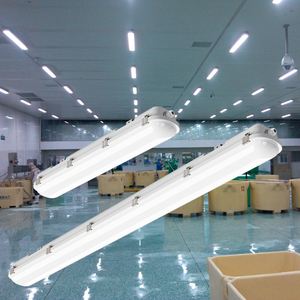
Excessive glare is the leading cause of visual fatigue and screen reflection complaints in desk-bound environments. Modern architectural linear lights and troffers utilize multi-layered optical stacks: a primary high-transmittance PMMA diffuser combined with a precision-etched micro-prismatic optical film. This suppresses high-angle intensity above 65 degrees, achieving visual comfort compliant with EN 12464-1 standard without loss of system efficacy.
Suspended linear fixtures featuring independent 70/30 or 50/50 direct/indirect light distributions create a balanced luminous environment. Upward illumination bounces off ceiling planes to eliminate harsh shadows and produce a spacious volumetric aesthetic, while controlled downward distribution delivers precise task lux levels (300 lx to 500 lx) directly to work surfaces.
Mechanical joint engineering has evolved significantly. Leading Chinese suppliers provide precision CNC-machined quick-connect brackets, internal mechanical alignment pins, and continuous plug-and-play wiring harnesses. This allows contractors to install continuous light runs exceeding 100 meters without light leakage at profile joints, reducing on-site installation labor by over 40%.
Securing high-quality commercial fixtures from China requires a multi-stage Quality Assurance (QA) protocol. Purchasing agents and engineering teams should establish rigid gatekeeping criteria before signing supply agreements:
Require complete submittal packages including LM-79 (photometric integrated sphere and goniophotometer test reports), LM-80 (LED package lumen maintenance data), TM-21 life extrapolations (confirming L80B10 > 50,000 hours at 85°C), official ETL/UL certificates, and IES photometric files for lighting calculations in Dialux or Relux.
Verify that the factory performs thermal imaging under steady-state operating conditions (Tc temperature monitoring of drivers and LED junction temperatures). Confirm inline high-voltage dielectric voltage-withstand testing (Hi-Pot test), grounding continuity tests, and 100% full-load aging burn-in for at least 4 to 8 hours prior to final packaging.
Inspect sample lots according to ISO 2859-1 (AQL Level II standard). Evaluate powder coat thickness (minimum 60-80 microns using gauge meters), cross-hatch adhesion testing, CCT color drift using portable spectrometers, mechanical fit of end caps, and drop-test packaging compliance (ISTA 1A/2A standards).
Direct technical and logistical answers to common inquiries encountered when sourcing office lighting from Chinese manufacturers.
Standard production lead time for catalog commercial fixtures is typically 15 to 22 business days. For fully custom engineered extrusion profiles, bespoke powder-coat color matching (RAL specs), or specialized DALI-2 dimming configurations, initial prototype approval takes 7 to 10 days, followed by mass production in 25 to 30 days. Express project tracks are available for urgent commercial build-outs.
Top-tier manufacturers maintain certified laboratory testing equipment and work directly with authorized field representatives from Intertek (ETL) and Underwriters Laboratories (UL). Compliance is built into the product design stage by utilizing UL-recognized drivers, flame-retardant wiring, approved terminal blocks, and certified aluminum extrusions. Official file numbers are provided with all engineering submittal packages for permit approvals.
Yes. Any fixture style can be value-engineered to align with project FF&E budget constraints. Options include adjusting aluminum profile wall thickness, modifying driver brands (e.g., specifying cost-effective 0-10V dimmable drivers while maintaining high power factor > 0.95), optimizing LED chip density, or altering shade materials, all while preserving the visual aesthetic and safety certification listings.
Standard commercial warranties range from 5 to 7 years, covering complete luminaire failure, LED lumen depreciation beyond L80 specs, driver failure, and finish degradation. Warranties include direct factory replacement of components or complete fixtures shipped to the job site. Advanced extended warranty terms are available upon request for high-utilization commercial facilities operating 24/7.
Reliable suppliers enforce strict 3-Step MacAdam Ellipse (SDCM < 3) LED chip binning protocols for all commercial production runs. This guarantees that fixtures installed across different floors, corridors, or building wings exhibit identical color temperatures (e.g., 3000K, 4000K, or 5000K) without visible shift or batch variation.
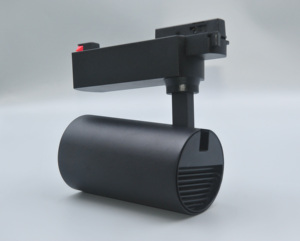
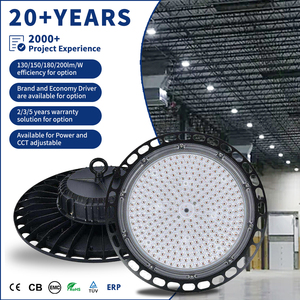
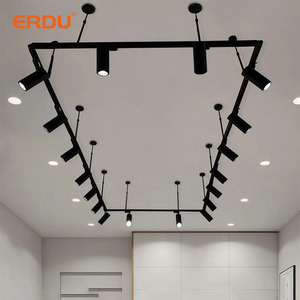
Yes. Enterprise buyers can consolidate office linear lights, high-bay luminaires for industrial/warehouse spaces, track spots, decorative reception pendants, and illuminated vanity mirrors under a single manufacturer. This consolidates shipping logistics into unified sea-freight containers, lowers customs clearance overhead, and provides a single accountable entity for project warranties.
Access our comprehensive commercial product catalog, request IES photometric data files, order engineering samples, or speak directly with our Senior Commercial Lighting Directors.