Explore our export-grade outdoor LED luminaires engineered for extreme weather durability, architectural precision, and high luminous efficacy across global development projects.
The global exterior illumination sector has undergone a fundamental shift from simple lux output to high-precision optical control, energetic durability, and smart-city network integration. As commercial developers, engineering contractors, and municipal procurement directors seek to source high-reliability fixtures, China remains the epicenter of advanced solid-state lighting (SSL) engineering and scalable manufacturing. However, differentiating between standard assembly workshops and tier-one architectural-grade original equipment manufacturers (OEMs) requires a deep technical understanding of metallurgy, thermal dynamics, optical physics, and driver topology.
Leading Chinese outdoor lighting manufacturers have transitioned from low-cost mass assembly to high-value research and design centers. Modern industrial facilities in lighting hubs such as Ningbo, Zhongshan, and Shenzhen now utilize fully automated SMT (Surface-Mount Technology) lines, in-house goniophotometer testing darkrooms, and advanced salt-spray corrosion laboratories. This infrastructure allows top exporters to deliver luminaires compliant with stringent global regulatory standards—including UL 1598, ETL, ENEC, CE, Title 24, and Dark-Sky International requirements—while achieving extraordinary system efficacies reaching up to 160 to 180 lumens per watt.
Evaluating an export partner requires inspecting four critical pillars of luminaire construction: mechanical thermal design, surface protection, driver reliability, and optical control.
Premium outdoor luminaires employ ADC12 high-pressure die-cast aluminum alloys featuring copper contents under 0.1% to eliminate galvanic corrosion risks. In-house thermal simulation software optimizes fin pitch and surface area to maintain LED junction temperatures (Tj) below 65°C under extreme ambient conditions, protecting L80B10 lifespans beyond 50,000 hours.
To resist coastal salt fog and extreme UV degradation, top exporters execute a multi-stage pretreatment process involving zinc phosphate washing followed by AkzoNobel architectural-grade electrostatic powder coating. This delivers 1,000+ hour salt spray test compliance (ASTM B117) and superior color retention (Delta E < 3 over 5 years).
Reliability hinges on internal electronic power supplies. Top-tier Chinese exporters integrate high-efficiency drivers (Inventronics, MeanWell, Philips Xitanium) equipped with 10kV to 20kV surge protection devices (SPD), active power factor correction (PFC > 0.95), and total harmonic distortion (THD) under 10% across universal 120-277V / 347-480V inputs.
To assist procurement managers in value-engineering without compromising longevity, the table below highlights the structural differences between architectural-grade exterior luminaires and commercial economy alternatives produced in China.
| Specification Parameter | Architectural Spec-Grade (Top Exporters) | Standard Commercial (Economy Grade) | Procurement Impact & ROI |
|---|---|---|---|
| Housing & Metallurgy | ADC12 Low-Copper Die-Cast Al / Extruded 6063 | Recycled Scrap Aluminum / Thin Sheet Metal | Prevents structural housing oxidation and heat sink degradation in 3+ years. |
| Optical Lens Material | Optical-Grade PMMA (Anti-UV) / Borosilicate Glass | Low-grade Polycarbonate (PC) without UV stabilizer | PMMA maintains >92% light transmittance without yellowing or clouding over time. |
| Ingress & Impact Rating | IP65 / IP66 / IP67 Sealed with Silicone Gaskets; IK08-IK10 | IP64 Foam Gaskets; IK06 Impact Resistance | Prevents moisture penetration, internal condensation, and damage from vandalism. |
| Surge Protection (SPD) | Integrated 10kV / 20kV SPD (IEEE C62.41.2) | Basic 2kV - 4kV Driver Internal Protection | Protects municipal installations against lightning strikes and grid voltage spikes. |
| Thermal Management | Engineered Heat-Sink Fins, Tj < 65°C @ 45°C Ambient | Smooth Compact Enclosure, Tj > 85°C | Doubles operational lumen maintenance lifespan (L80B10 vs. L70B50). |
As smart urban infrastructure expands and sustainability regulations tighten worldwide, foreign buyers must realign their sourcing specifications with emerging technological trends.
Future-proof outdoor fixtures are moving away from hard-wired photocells toward standardized receptacles (Zhaga Book 18 socket or 7-pin ANSI C136.41 NEMA nodes). This modularity allows municipal buyers and commercial facility managers to plug in IoT control nodes, LoRaWAN mesh sensors, or DALI-2 drivers seamlessly, enabling automated dimming, asset tracking, and dynamic energy metering without replacing the fixture core.
The convergence of high-efficiency solar photovoltaics and lithium iron phosphate (LiFePO4) battery technology has revolutionized exterior pathway, perimeter, and street lighting. Leading Chinese exporters now offer hybrid Intelligent Power Management (IPM) systems that automatically seamlessly switch between stored solar energy and grid power during prolonged inclement weather, reducing carbon footprints while ensuring 100% uptime.
Environmental light pollution mandates are forcing commercial developers to demand fixtures certified under the BUG (Backlight, Uplight, Glare) optical rating system. Tier-one factories utilize custom asymmetrical optics and internal glare-shielding cut-offs (Uplight U0 rating) to direct 100% of emitted lumens onto designated target zones while shielding nocturnal ecosystems and surrounding residential zones.
Sustainability directives are reshaping structural fixture assembly. Leading exporters now engineer toolless-entry housings with quick-disconnect driver plates and replaceable LED engines. This modular circular approach reduces long-term maintenance labor by up to 60%, allowing field engineers to replace drivers or upgrade optical engines on-site without discarding structural aluminum bodies.
Building a resilient international supply chain requires more than selecting a product from a catalog; it requires an accountable manufacturing partner equipped to handle complex project specifications. Drawing on over 40 years of combined design, sourcing, and OEM/ODM engineering capabilities, top-tier Chinese manufacturers provide a end-to-end framework tailored for hospitality, commercial, multifamily, and municipal lighting projects.
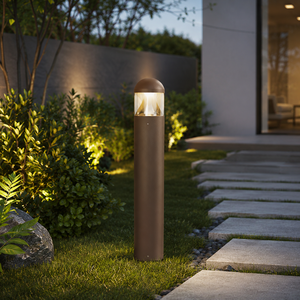
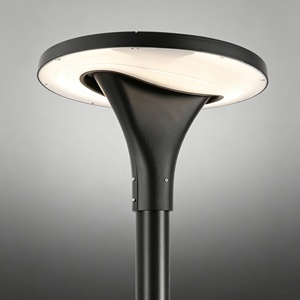
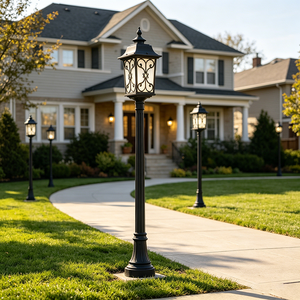
1. Single-Source Specification Efficiency: Modern outdoor developments require cohesive architectural aesthetics spanning wall sconces, pathway bollards, floodlights, post-top streetlights, and landscape accent units. By consolidating architectural hardware with integrated LED controls under one single manufacturer, procurement teams streamline submittals, harmonize color temperatures (CCT consistency within 3-step MacAdam Ellipse), and dramatically simplify container freight logistics.
2. Strict Compliance & Third-Party Testing: Quality control begins before production starts. Leading exporters maintain rigorous quality management systems certified to ISO 9001, ISO 14001, and ISO 45001. Products undergo systematic batch testing, including integrating sphere spectroradiometer analysis, thermal shock testing (-40°C to +60°C), IPX6/IPX7 waterproof pressure chambers, and vibration resistance testing (3G ANSI C136.31 standard for bridge and roadway fixtures).
3. Brand Program Alignment & Value Engineering: Experienced exporters leverage established brand programs across major international hospitality and commercial chains. Whether modifying catalog fixtures for specific mounting bracket configurations, custom RAL powdercoat finishes, integrated emergency battery back-ups, or meeting strict FF&E budget parameters, in-house CAD/3D modeling teams can deliver sample prototypes within 7 to 10 working days.
Clear, technical answers to common questions faced by international buyers, electrical engineers, and sourcing professionals when importing from China.
Request an official IP test report issued by an accredited third-party laboratory (such as TÜV, SGS, Intertek, or UL) compliant with IEC 60529 standards. A valid report details test durations, water pressure, and dust chamber conditions. Furthermore, inspect the physical construction: spec-grade IP65/IP66 fixtures must utilize continuous molded non-aging silicone gaskets, waterproof IP68 cable glands, and pressure-equalization breathers (Gore valves) to prevent internal condensation caused by thermal vacuum shifts.
For marine or coastal environments within 5km of saltwater, specify low-copper die-cast aluminum alloys (copper content < 0.1%) such as ADC12, or marine-grade extruded 6063 aluminum. In addition, the surface finish must undergo a multi-pass passivation pretreatment (chromate or fluoropolymer conversion) followed by a minimum 80-100 micron coating of architectural powder paint tested to ASTM B117 salt fog standards for 1,000 to 3,000 hours.
Top manufacturers provide standardized IES (Illuminating Engineering Society) or LDT (EULUMDAT) photometric files generated via goniophotometer testing in LM-79 accredited labs. These files allow lighting engineers to run Dialux or Relux simulations to calculate exact lux distribution, uniformities, light trespass, and BUG (Backlight, Uplight, Glare) ratings prior to procurement.
Reputable manufacturers enforce strict LED binning protocols with chip suppliers (such as Cree, Lumileds, Bridgelux, or Osram). By sourcing LEDs strictly within a 3-step or 5-step MacAdam Ellipse bin, factories ensure uniform color chromaticity across thousands of individual fixtures, eliminating visible color discrepancies between adjacent poles or building facade sconces.
Yes. Most catalog pathway lights, bollards, and landscape floodlights can be custom-engineered with internal step-down drivers to accept 12V-24V AC/DC low-voltage inputs. Low-voltage configurations simplify electrical code compliance, reduce trenching costs, and enhance safety in residential gardens, public parks, and resort pool environments.
For North America, fixtures must carry UL 1598 or CSA C22.2 listing marks (typically certified via UL, ETL, or CSA laboratories), with DLC (DesignLights Consortium) 5.1 Premium listing required for commercial utility rebate eligibility. For the European Union, CE-LVD, CE-EMC, RoHS, REACH, and ENEC certifications are required, along with Ecodesign (EPR) energy labeling compliance.
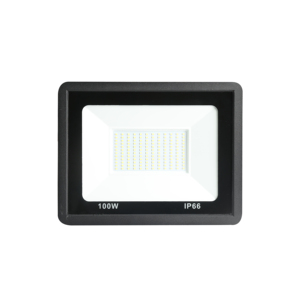
High-wattage floodlights (100W–1000W+) utilize thermal heat-pipe technology or high-density extruded aluminum fins coupled directly to metal-core PCBs (MCPCB) with high thermal conductivity (>2.0 W/m-K) dielectric layers. Temperature-foldback drivers are also integrated to automatically dim output slightly if ambient temperatures exceed safe thresholds, preserving the LED chips from catastrophic failure.
For standard catalog modifications (custom CCT, finish color, or voltage), initial production samples ship in 7 to 10 days. Fully custom bespoke fixtures requiring new die-cast tooling or extruded molds typically require 25 to 30 days for tool design and 3D sample validation, followed by 25 to 30 days for mass production upon sample sign-off.
Unlike indoor circuits, outdoor lighting networks are exposed to high-voltage transients caused by indirect lightning strikes, industrial machinery switching, and electrostatic discharge along long cable runs. Integrated 10kV/20kV surge protection devices (SPD) absorb differential and common-mode voltage spikes, shielding driver electronics and preventing premature system failures.
Commercial spec-grade exterior lighting should carry a 5-year to 10-year comprehensive warranty covering complete fixture replacement or component supply (driver, light engine). The warranty terms must clearly specify lumen depreciation thresholds (e.g., maximum 30% degradation over 50,000 hours, L70) and cover finish corrosion resistance under rated environmental conditions.
Streamline your commercial procurement with certified, high-efficiency outdoor luminaires. Contact our engineering team today to request complete submittal packages, IES files, and project quote analysis.
Send an Inquiry