Engineered for commercial, hospitality, industrial, and outdoor emergency power requirements. Fully certified with customizable lumen packages, backup durations, and housing options.
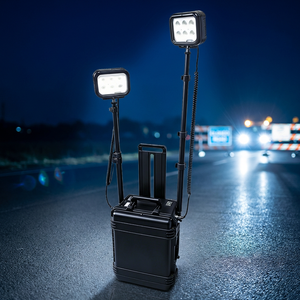
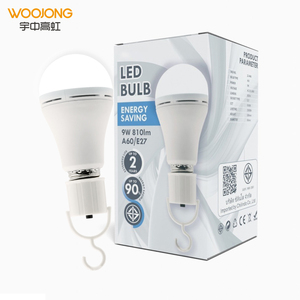
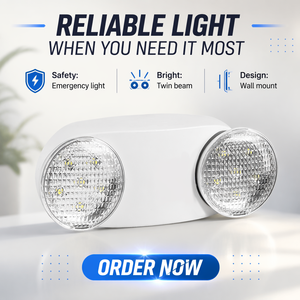
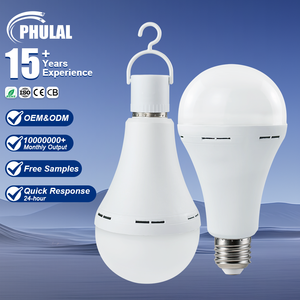
In global architectural engineering, commercial real estate development, and municipal safety management, emergency lighting fixtures are not merely decorative elements—they are critical, life-saving infrastructure regulated by stringent international life-safety codes (such as NFPA 101, UL924, EN 60598-2-22, and AS/NZS 2293). As procurement professionals evaluate top emergency lighting factories in China, understanding the technical depth, vertical integration, and component reliability of leading OEM manufacturers becomes mandatory.
China's emergency lighting manufacturing landscape—centered around industrial hubs like Zhongshan, Ningbo, Shenzhen, and Foshan—produces over 70% of the world's commercial and industrial emergency illumination units. Top-tier Chinese OEM/ODM factories have evolved beyond low-cost assembly to become global leaders in integrated lithium iron phosphate (LiFePO4) battery management systems (BMS), high-efficiency optical diffusers, and automated self-testing (DALI-2 / Wireless Mesh) emergency drivers.
From die-casting aluminum housings and SMT surface-mount LED driver assembly to precision injection molding of flame-retardant ABS (UL94 V-0), top Chinese factories eliminate supply chain latency.
Leading manufacturers maintain internal ISO 17025 accredited testing labs equipped with goniophotometers, integrating sphere systems, thermal shock chambers, and salt spray corrosion testing rigs.
Modify catalog items seamlessly—whether adapting universal voltage drivers (120-347V AC), adjusting emergency battery runtime (90 to 180 minutes), or specifying damp/wet location IP rating enhancements.
Navigating emergency lighting procurement requires foresight into emerging technical standards and green building directives. Engineering teams and importers must align their technical procurement specifications with the following industry megatrends:
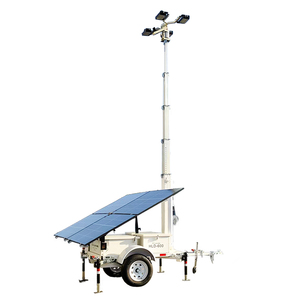
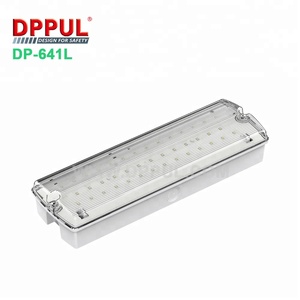
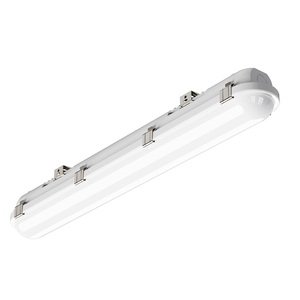
| Feature / Parameter | Standard Commercial (Bulkhead/Twin Head) | Industrial Tri-Proof Vapor-Tight | Mobile Solar Emergency Towers |
|---|---|---|---|
| Typical Input Voltage | 120-277V AC / 120-347V AC (50/60Hz) | 100-277V AC Universal | Off-Grid Solar / 24V-48V DC / MPPT |
| Battery Chemistry | LiFePO4 3.2V / 6.4V or High-Temp Ni-Cd | LiFePO4 Long-Life Pack | Deep-Cycle Lithium/Gel Battery Bank |
| Emergency Runtime | 90 Minutes (UL924) / 180 Mins (CE/CB) | 90 - 180 Minutes Continuous | 10 - 24 Hours Continuous High Output |
| Protection Rating | Damp Location / IP44 - IP65 | IP66 / IP67 & IK10 Vandal-Resistant | IP65 Heavy-Duty Weatherproof |
| Primary Applications | Hotels, Office Corridors, Stairwells | Food Processing, Parking Garages, Warehouses | Construction Sites, Mining, Disaster Relief |
Sourcing directly from established Chinese emergency lighting manufacturers provides international buyers, distributors, and engineering contractors with specialized OEM/ODM customization capabilities, backed by rigorous quality control protocols tailored for enterprise project demand.
Every commercial fixture manufactured complies with market-specific legal mandates: ETL and UL924 listed for North America, CE, CB, RoHS, and EN 60598-2-22 certified for the European Union, UKCA for Great Britain, and SAA/RCM for Australasia.
To prevent field failures in critical life-safety scenarios, 100% of emergency battery packs undergo automated charge-discharge cycling, followed by a minimum 4-hour high-temperature full-load aging test on the assembly line prior to packaging.
Drawing on tens of thousands of completed project installations worldwide, factory engineering teams collaborate closely with specifiers to meet brand-standard specifications for top multinational hotel chains, commercial office developers, and residential high-rises.
Whether you require bespoke architectural finishes (brushed brass, matte black, gunmetal, or custom RAL color matching), specialized optical beam distribution, integrated microwave motion sensors with bi-level dimming, or consolidated multi-category shipping, direct factory partner support ensures uncompromising design intent, rapid prototyping cycles (7-14 days), and optimized bill-of-materials (BOM) cost performance.
Expert technical insights to assist procurement managers, electrical engineers, and lighting importers in evaluating factory partners.
The mandatory certification depends entirely on your target destination market. For the North American market (USA & Canada), fixtures must carry UL924 listing or ETL certification (tested to UL924 standards), as well as FCC compliance for electromagnetic interference. For European markets, fixtures require CE-LVD, CE-EMC, RoHS, and IEC/EN 60598-2-22 (the specific standard for emergency lighting luminaires). For Australia and New Zealand, AS/NZS 2293.3 testing reports and RCM compliance are mandatory. Always request factory test reports issued by accredited third-party laboratories such as TÜV, Intertek, SGS, or UL.
LiFePO4 batteries offer significant technological advantages over traditional Nickel-Cadmium (Ni-Cd) cells. LiFePO4 features a higher energy density, allowing for smaller battery enclosures, zero toxicity (RoHS compliant without cadmium), extended operational lifespan (5 to 8 years versus 2 to 3 years for Ni-Cd), superior high-temperature resistance, and significantly lower self-discharge rates. Furthermore, LiFePO4 chemistry eliminates the "memory effect" that historically degraded Ni-Cd batteries over repeated short-duration discharge cycles.
Yes. Leading Tier-1 OEM/ODM manufacturers specialize in value-engineering custom fixtures based on architectural renderings, designer sketches, CAD drawings, or competitive specification sheets. Factories can modify mounting brackets, electrical input voltages (such as universal 120-347V AC for Canada), shade fabrics, metallic plating finishes (brushed nickel, antique brass, matte black), emergency wattages, CCT color temperatures, and integrated controls (Bluetooth mesh, DALI-2, 0-10V dimming) while preserving complete safety certification compliance.
Under North American life-safety codes (NFPA 101 and National Electrical Code / NEC), emergency lighting systems must provide a minimum of 90 minutes of continuous emergency illumination upon primary power interruption. In European, UK, Middle Eastern, and Asian jurisdictions governed by IEC standards, the mandatory emergency duration is typically 180 minutes (3 hours). Top Chinese factories engineer emergency drivers and battery capacities to accommodate either 90-minute or 180-minute operation depending on the destination code requirement.
Reputable factories enforce strict multi-stage Quality Assurance (QA) protocols: 1) Incoming Quality Control (IQC) testing of raw LED chips, PCB boards, and battery cells; 2) In-Process Quality Control (IPQC) monitoring SMT solder paste alignment and driver potted insulation; 3) 100% full-load aging tests on all drivers and battery circuits; 4) Outgoing Quality Control (OQC) performing final functional drop tests, dielectric voltage-withstand testing (Hi-Pot test), and photometer validation. Furthermore, lithium battery shipments are backed by UN38.3 transport safety testing reports and MSDS (Material Safety Data Sheets) for seamless air/sea freight customs clearance.
Yes. Group-level manufacturers with multi-category production facilities (such as integrated decorative lighting, LED vanity mirrors, and emergency bulkhead factories) allow design and procurement teams to consolidate their FF&E (Furniture, Fixtures & Equipment) packages under a single vendor umbrella. This drastically simplifies submittal documentation, sample sign-offs, production tracking, and sea-container freight logistics, resulting in significant total landed cost savings.
Connect with our technical engineering & export division today for competitive B2B factory pricing, photometric IES files, submittal cut sheets, and custom product development support.
Contact Us