Engineered for high-traffic hospitality, industrial warehouses, commercial offices, and luxury residential projects. Value-engineered to comply with ETL, UL, CE, and RoHS standards.
Navigating the global architectural, commercial, and hospitality lighting supply chain requires a deep understanding of manufacturing capabilities, OEM/ODM value engineering, and compliance verification. China remains the undisputed epicenter of world-class optoelectronic manufacturing, yielding over 70% of global LED components, driver electronics, and high-precision aluminum extrusions. However, the paradigm of bulk sourcing has radically evolved: leading B2B purchasing directors, lighting designers, and EPC contractors no longer search merely for low-cost suppliers, but for technically proficient manufacturing partners capable of delivering spec-ready, code-compliant, and brand-approved luminaires.
Modern commercial project specifications—ranging from 5-star hotel interior fit-outs to massive logistics warehouses—demand luminaires engineered to withstand real-world operational stress. A fixture installed in a hotel guestroom or an industrial bay is subject to continuous power cycles, thermal accumulation, maintenance handling by site personnel, and stringent municipal building codes (such as ADA compliance, Title 24 efficiency mandates, and UL/ETL safety certifications). As an established leader in custom decorative and architectural lighting, our enterprise model integrates directly into this supply chain matrix, solving the inherent friction between high-concept industrial design and budgetary feasibility.
Bespoke modifications for scale, finish, shade fabric, mounting assemblies, integrated USB/power modules, and edge-lit acrylic technology tailored to project CAD files.
Reduce vendor fragmentation by specifying mirrors, sconces, chandeliers, and high-bay task lighting under a unified submittal package with one point of contact.
Leverage established relationships with over 70 global hotel brand programs, accelerating project approval timelines for franchised and boutique property developments.
The global commercial lighting sector is undergoing a profound technological shift driven by decarbonization targets, human-centric design philosophy, and advanced semiconductor optics. Modern wholesale manufacturers in China are moving past legacy COB and SMD configurations toward sophisticated optical systems. Key technical trajectories shaping modern lighting specifications include:
To reduce SKU complexity and inventory holding costs for distributors, modern luminaires incorporate multi-wattage dip switches and 3CCT color selection (2700K/3000K/4000K or 3000K/4000K/5000K) directly on the driver circuit board without compromising IP ratings.
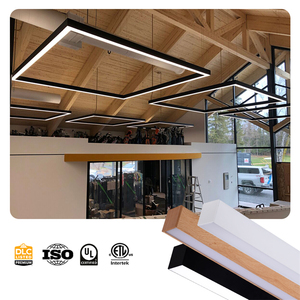
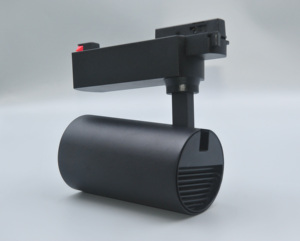
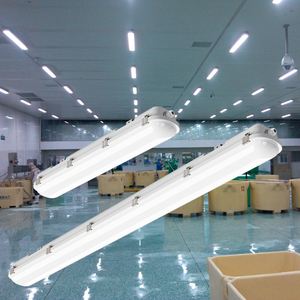
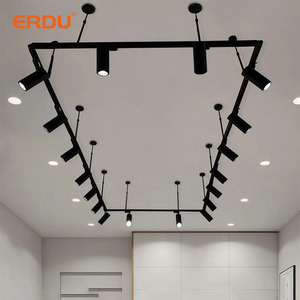
Commercial office linear lights and retail track fixtures now utilize specialized optical lenses and anti-glare louvers that maintain light output exceeding 140 lm/W while maintaining Unified Glare Rating (UGR) levels below 19 for occupant visual comfort.
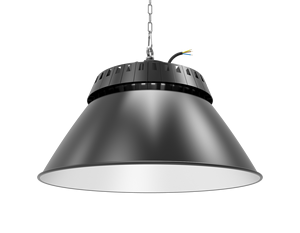
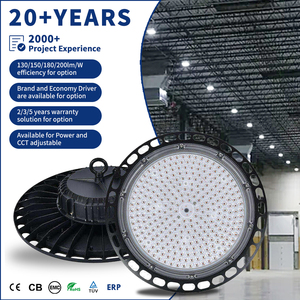
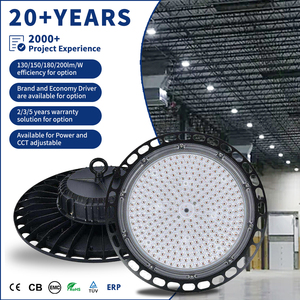
Industrial UFO high-bays and high-wattage architectural spotlights utilize ADC12 grade die-cast aluminum heat sinks designed via computational fluid dynamics (CFD) to guarantee junction temperatures remain under 65°C, ensuring L80B10 lifespan beyond 50,000 operational hours.
Furthermore, edge-lit acrylic panel technologies have transformed decorative fixtures. By light-guiding LED arrays along precision-etched acrylic plates, manufacturers create ultra-slim table lamps, floating sconces, and architectural rings that distribute uniform, shadowless illumination while eliminating visible LED hot spots.
High-volume commercial lighting procurement carries inherent operational risks if quality control is not institutionalized at the factory level. A single batch of defective drivers or inconsistent LED binning can derail an entire building commissioning deadline. Our manufacturing ecosystem enforces a rigorous multi-stage quality assurance protocol certified against ISO 9001 and verified by third-party testing labs (ETL, UL, Intertek, SGS).
| Quality Parameter | Standard Industry Sourcing | Our Factory Standard (Majestic Standard) | Impact on Project & Maintenance |
|---|---|---|---|
| Color Consistency | 5-Step MacAdam Ellipse (Visible CCT shift) | < 3-Step MacAdam Ellipse (Strict Binning) | Eliminates color variance across hotel corridors & open office ceilings. |
| Driver Reliability | Generic unbranded drivers (MTBF < 20k hrs) | Class 2 Isolated Drivers (MeanWell / Lifud / Tridonic) | Prevents early flicker, harmonic distortion, and premature fixture outage. |
| Surface Finish & Coating | Basic single-layer liquid spray paint | Multi-stage electroplating & thermosetting powder coat | Resists salt spray, high humidity in baths, cleaning chemicals, and scratching. |
| Ingress Protection (IP) | Self-declared IP ratings without testing | Certified IP65/IP66 wet-location testing reports | Guarantees waterproof integrity for vapor-tight, outdoor, and wet room applications. |
| Dimming Protocol | Basic leading-edge phase dimming only | 0-10V, DALI-2, TRIAC, ELV & Smart IoT compatibility | Seamless integration into building management systems (BMS) and Lutron controls. |
Looking toward the 2026–2030 procurement horizon, strategic sourcing directors are re-evaluating their wholesale vendor relationships based on three macro factors:
1. Seamless Smart Building Integration (DALI-2, Matter, Zigbee 3.0): Commercial real estate developers are rapidly adopting automated energy management systems. Modern factory lines must supply luminaires fitted with standardized sensor sockets (such as Zhaga Book 18 or NEMA 7-pin receptacles) allowing plug-and-play installation of microwave motion sensors, daylight harvesting sensors, and wireless mesh nodes.
2. Sustainable Circular Manufacturing & Decarbonization: International building standards (LEED v4.1, BREEAM, WELL Standard) mandate transparency in embodied carbon and hazardous substances. Forward-thinking China lighting manufacturers are transitioning to 100% recyclable aluminum alloys, lead-free soldering, low-VOC powder coatings, and biodegradable packaging, accompanied by comprehensive Environmental Product Declarations (EPDs).
3. Value Engineering (VE) without Aesthetics Compromise: Budget overruns are the primary cause of project delay. The true benchmark of an authoritative lighting manufacturer is the ability to analyze a high-end designer fixture and produce an identical visual aesthetic using alternative extrusion profiles, standardized lamping options, or modular shade construction—reducing fixture cost by 25% to 40% while preserving electrical safety compliance.
All modern architectural and industrial fixtures manufactured in our facilities carry ETL, UL, CE, and RoHS certifications aligned with specific project requirements. For North America, fixtures meet UL 1598, UL 8750, and CSA C22.2 safety standards. Damp and wet-location listings are provided for bath, balcony, and exterior installations, while ADA compliant profiles (< 4 inches depth) and Title 20/24 high-efficacy options are available upon request.
Our in-house engineering team translates architectural sketches, 3D renderings, or CAD files into fully dimensioned shop drawings within 48 to 72 hours. We evaluate structural mounting, thermal dissipation, driver housing, and photometric distribution. Once the shop drawing is signed off, a physical control sample is produced for finish, fabric swatch, and electrical performance verification prior to mass manufacturing.
Yes. By leveraging the Majestic FAMILY ecosystem (drawing on nearly 30 years of hospitality supply experience), purchasing agents can consolidate illuminated vanity mirrors, decorative table lamps, floor lamps, corridor sconces, and public-area chandeliers into a single spec-ready order. This minimizes vendor administration, streamlines submittals, and optimizes ocean freight container loading.
Every standard and custom commercial fixture is backed by comprehensive submittal packages. This includes official IES (.ies) and EULUMDAT (.ldt) photometric files tested in darkroom goniophotometers for AGi32 or DIALux lighting calculations, detailed specification cut sheets, wiring diagrams, driver specification data, and surface finish swatches.
Standard catalog product samples are dispatched within 7 to 10 working days. Custom engineering prototypes require 2 to 3 weeks depending on tooling and finish requirements. Mass production lead times typically range from 30 to 45 days upon final shop drawing approval and deposit receipt, with expedited production schedules available for critical building handover dates.
We maintain strict master control samples for every metallic finish (such as brushed brass, gunmetal, matte black, and polished chrome) and fabric shade material. Automated powder-coating lines and computer-controlled electroplating baths ensure delta-E color variations remain visually imperceptible across separate production runs and building phases.
Connect directly with our engineering and B2B contract team to receive cut sheets, IES files, factory-direct pricing, and custom sample submittals for your upcoming projects.
Get Catalog