
IP65 Industrial
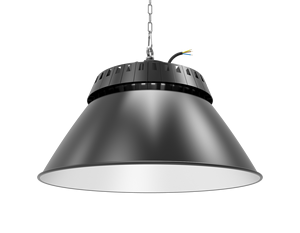
Explore our spec-ready architectural high-bay, linear accent, track spotlights, and commercial luminaires engineered for seamless joinery integration, heat dissipation, and superior lumen maintenance.
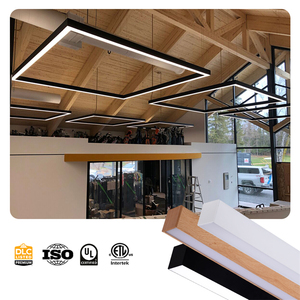
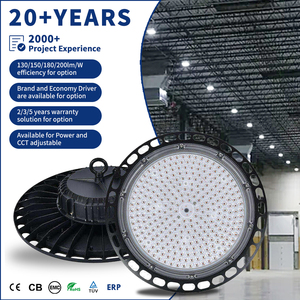
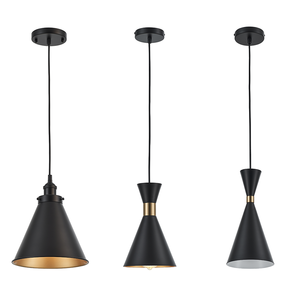
In modern luxury retail, hospitality guestrooms, high-end residential joinery, and corporate headquarters, cabinet lighting has transformed from a secondary decorative afterthought into an integral component of architectural spatial design and task illumination. Specifiers, lighting designers, and millwork engineering teams require reliable OEM/ODM Cabinet Lighting Suppliers capable of delivering miniaturized form factors, impeccable thermal performance, seamless dimming integration, and strict color consistency across multi-phase global rollouts.
Unlike standard surface-mounted residential fixtures, professional OEM/ODM cabinet lighting demands deep engineering synergy between electrical components, extruded aluminum channels, optical diffusers, and wood/metal millwork. Whether integrating ultra-slim recessed linear tape lights, surface-mounted puck lights, glass-shelf edge lighting, or under-cabinet task illumination, top-tier commercial manufacturers must address critical engineering challenges including thermal throttling, voltage drop across extended runs, glare control, and compliance with strict energy building codes such as California Title 24, Energy Star, and UL 1598/2108 safety standards.
Leveraging decades of contract manufacturing, rapid prototyping, and international supply chain mastery to simplify commercial FF&E and architectural specifications.
Full CAD/CAM engineering teams dedicated to developing proprietary extrusion profiles, custom mounting clips, magnetic latching systems, and bespoke die-cast heat sinks tailored precisely to your cabinet dimensions.
Accelerated 3D printing, rapid aluminum CNC machining, and SMT PCB sampling enable working submittal samples within 7 to 10 business days, ensuring zero project delay during owner review gates.
Every custom OEM fixture is engineered to pass stringent third-party electrical safety audits (ETL, UL 1598, UL 2108 Class 2). Title 20/24 JA8 compliant drivers and damp/wet location ratings available on demand.
Delivering high CRI (Ra ≥ 95, R9 > 80) LED engines with tight MacAdam Ellipse grouping (<3 SDCM). Custom CCT options ranging from warm 2200K ambient to crisp 6500K task lighting, plus dynamic tunable white.
Consolidate vanity lighting, decorative wall sconces, linear cabinet accents, and LED mirrors under one spec-ready partner to streamline submittals, factory audits, sample reviews, and unified freight shipping.
In-house optimization of component BOMs without compromising visual aesthetic, structural integrity, or lighting performance—enabling procurement agents to meet tight FF&E budget targets.
Achieving flawless lighting performance inside enclosed casework requires deep technical knowledge across three core domain pillars: optical physics, thermal management substrate engineering, and low-voltage electrical distribution.
Traditional SMD LED strip lights mounted in shallow cabinet channels often produce visible "hotspots" or dotting on polished marble counters, high-gloss lacquered cabinets, or glass shelving. Our OEM cabinet lighting solutions utilize state-of-the-art Chip-on-Board (COB) phosphor extrusion technology paired with micro-prismatic and opal PMMA diffusers. This ensures 100% continuous, dotless linear illumination across beam angles ranging from 30° spot focus to 120° wide flood wall-washing.
Heat accumulation within wooden or composite cabinetry is the primary cause of premature LED color shift and lumen degradation. We utilize heavy-duty 6063-T5 anodized aluminum channel extrusions paired with double-sided 3oz copper PCB substrates. This design maintains LED junction temperatures well below 65°C under continuous operational loads, guaranteeing an operational lifespan exceeding L70 > 50,000 hours.
Commercial installations demand zero-flicker dimming performance compatible with leading control systems (Lutron, Control4, Crestron, DALI-2, 0-10V, and TRIAC/ELV). Our OEM power supplies feature auto-reset short circuit protection, over-current protection, and ultra-smooth dimming down to 0.1%. Class 2 low-voltage wiring pathways eliminate strict conduit requirements inside millwork, drastically reducing job-site installation labor costs.
Key technological shifts shaping how commercial purchasing managers, specifiers, and joinery manufacturers plan next-generation lighting programs.
Millwork designers are shifting toward ultra-slim linear channels under 8mm in width and 6mm depth. These micro-profiles recess flush into cabinet side-panels and shelves, making the light source entirely invisible when turned off while delivering punchy task lumens when illuminated.
Circadian rhythm lighting is moving from high-end healthcare into hospitality guestrooms and executive suites. Procurement specifications increasingly call for dual-channel 2200K-6500K CCT tuning, allowing cabinet ambient lighting to transition automatically from energetic daylight during work hours to warm amber tones at night.
To reduce expensive electrician field hours during hotel or apartment complex construction, pre-wired quick-connect wire harnesses (IP67 latching connectors) are becoming the OEM standard. Pre-cut, factory-tested runs plug directly into central driver boxes with zero field soldering required.
Next-generation cabinet systems integrate compact wireless control receivers (Casambi, Zigbee 3.0, Matter) directly into the light fixture body or extrusion header. This enables individual shelf dimming, PIR occupancy sensing, and door-reed switch automation via smartphone apps or central BMS platforms.
ESG compliance is dictating supply chain selection. Leading OEM suppliers are adopting 100% recycled 6063 aluminum alloys, halogen-free wiring insulation, and modular driver housings designed for 100% disassembly and component-level recycling at end-of-life.
Commercial specifiers are abandoning basic CRI in favor of ANSI/IES TM-30-18 standards. OEM custom fixtures must report Fidelity Index ($R_f \ge 92$) and Gamut Index ($R_g \ge 100$), ensuring retail garments, luxury watches, food displays, and wood grains appear vividly lifelike.
Understanding the operational and cost differences between buying commodity off-the-shelf products and partnering with an OEM/ODM specialist.
| Evaluation Parameter | Standard Off-the-Shelf Fixtures | Custom OEM/ODM Engineered Solutions |
|---|---|---|
| Dimensional Fit | Fixed catalog lengths; requires field cutting & messy end-cap assembly. | Pre-cut to exact millimeter joinery tolerances with factory sealed end-caps. |
| Color Consistency (CCT) | 3-Step or 5-Step MacAdam; noticeable color shifts across multiple batches. | Strict 2-Step MacAdam Ellipse binning guaranteed across entire multi-year contracts. |
| Integration & Mounting | Bulky brackets that protrude outside cabinet profiles. | Custom recessed channels, hidden spring clips, or concealed magnetic mounts. |
| Wiring Harnesses | Generic pigtail wires requiring on-site stripping and junction boxes. | Factory-molded plug-and-play quick connectors tailored to cabinet wire channels. |
| Safety & Compliance | Basic CE or unverified self-declarations; potential clearance failure. | Fully certified ETL, UL 2108, UL 1598, Class 2, and Title 24 compliance submittals. |
| Brand Program Alignment | None; requires re-engineering to fit hotel brand standard packages. | Pre-approved by over 70 major hospitality & commercial brand programs worldwide. |
From initial design intent sketches to mass production and site delivery, our structured gate system mitigates risk at every phase.
Submission of client CAD files, renderings, or architectural submittal sheets. Design for Manufacturability (DFM) assessment conducted by our optical and thermal engineers.
Precision CNC extrusion cutting, custom PCB SMT assembly, and 3D printing of end-caps to generate a working physical sample within 7–10 days.
Integrating sphere and goniophotometer testing to produce accurate IES files, LM-79/LM-80 reports, and verify thermal dissipation under maximum ambient load.
Finalizing custom extrusion die tooling, plastic injection molds, and submitting sample assemblies for ETL/UL mark file expansion.
Automated high-speed SMT assembly, 100% burn-in testing, protective film packaging, and coordinated freight delivery directly to millwork factories or job sites.
Expert insights addressing key technical, commercial, and logistical questions raised by B2B buyers and specifiers.
A true OEM/ODM (Original Equipment / Original Design Manufacturer) controls the complete engineering and production pipeline—including aluminum extrusion die creation, SMT (Surface Mount Technology) LED board assembly, optical lens engineering, and photometric testing. Unlike stocking distributors who merely resell fixed catalog items, an OEM/ODM partner modifies physical dimensions, electrical wattages, optics, color temperatures, and mounting hardware to seamlessly integrate into your specific millwork design or brand standard package.
In North America, commercial under-cabinet and in-cabinet lighting must comply with UL 1598 (Luminaires) or UL 2108 (Low Voltage Lighting Systems) and be certified by a Nationally Recognized Testing Laboratory (NRTL) such as ETL or UL. Low-voltage installations typically utilize Class 2 power supplies (restricted to 60W at 24V DC per channel), which eliminates the requirement for heavy metal conduits inside wooden millwork. Additionally, projects in California require Title 24 JA8 compliance for high efficacy and color metrics.
Dotting is eliminated using two primary engineering methods: utilizing high-density COB (Chip-on-Board) LED strips which feature continuous phosphor coating, or selecting deeper extruded aluminum profiles paired with heavy opal PMMA diffusers. The ratio of LED pitch distance to diffuser depth ($D/P$ ratio) is calculated during the DFM phase to guarantee a 100% smooth, uniform beam without shadow lines or hotspots.
Standard catalog modifications (custom wire lengths, pre-cut lengths, specific CCT binning) typically carry flexible MOQs starting at 50 to 100 units with lead times of 2 to 3 weeks. Fully bespoke extrusion tooling or custom die-cast housings require a custom aluminum die development (typically 15–20 days) with mass production lead times of 4 to 6 weeks, depending on project scale and certification submittal requirements.
Yes. Our OEM driver pairings support comprehensive dimming protocols including 0-10V, TRIAC/ELV, DALI-2, and PWM. For smart building and hospitality Guest Room Management Systems (GRMS), we offer compact receivers compatible with Zigbee 3.0, Casambi, Bluetooth Mesh, and Matter—allowing smooth flicker-free dimming down to 0.1% brightness.
Wood is a natural thermal insulator, meaning heat generated by LEDs can get trapped inside cabinet cutouts. We mitigate this by engineering our channels with 6063-T5 structural aluminum extrusions that act as dedicated heat sinks. Additionally, our high-efficiency LEDs operate at over 120–140 lumens per watt, minimizing waste heat generation and keeping PCB junction temperatures safely below critical limits.
Absolutely. As a single-source specifier and manufacturer, we allow procurement teams to combine LED vanity mirrors, lighted medicine cabinets, under-cabinet linear runs, wardrobe closet rods, and ambient sconces under one consolidated OEM contract. This drastically simplifies logistics, guarantees perfect color temperature matching across all bathroom and guestroom fixtures, and reduces total freight overhead.